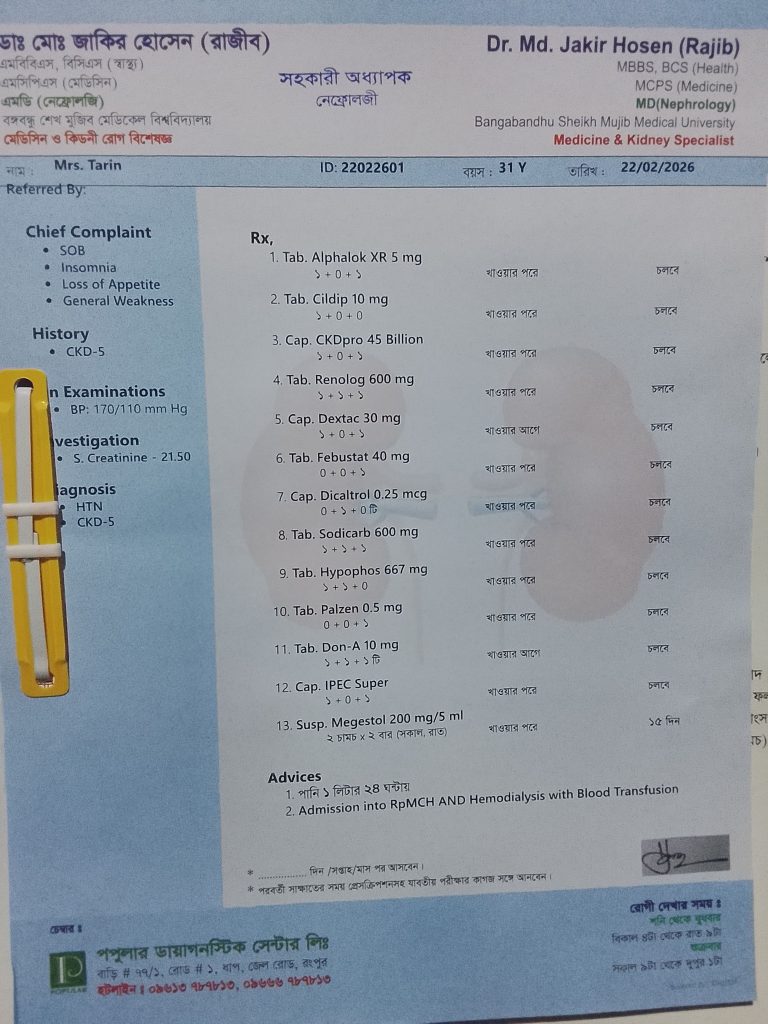
প্রেসক্রিপশন অনুযায়ী রোগীর মূল অবস্থা হলো:
Chief Complaint (CC)
Prescription এ লেখা আছে:
- SOB = Shortness of Breath → শ্বাসকষ্ট
- Insomnia → ঘুম না হওয়া
- Loss of appetite → ক্ষুধামন্দা
- General weakness → দুর্বলতা
Diagnosis
ডায়াগনোসিসে লেখা আছে:
- HTN → Hypertension (উচ্চ রক্তচাপ)
- CKD-5 → Chronic Kidney Disease Stage 5 (End Stage Kidney Disease)
Clinical findings:
- BP = 170/110 mmHg → severe uncontrolled hypertension
- Serum Creatinine = 21.50 mg/dL → খুব advanced renal failure
Advice এ “Hemodialysis with Blood Transfusion” দেওয়া হয়েছে → রোগী সম্ভবত uremic symptomatic ESRD + anemia of CKD তে আছে।
Tablet1). Alphalok XR 5 mg
এর generic হলো:
Prazosin Hydrochloride
Drug class:
- Alpha-1 adrenergic blocker
Indications
Hypertension: Alphalok XR is indicated in the treatment of all grades of essential (primary) hypertension and of all grades of secondary hypertension of variec etiology. It can be used as the initial and sole agent or it may be employed in a treatment program in combination with a diuretic and/or other antihypertensive drugs as needed for proper patient response. Renal blood flow and glomerular filtration rate are not impaired by long-term oral administration and thus Alphalok XR can be used with safety in hypertensive patients with impaired renal function.
Left Ventricular Failure: Alphalok XR is indicated in the treatment of left ventricular failure. Alphalok XR may be added to the therapeutic regimen in those patients who have not shown a satisfactory response or who have become refractory to conventional therapy with diuretics, with or without cardiac glycosides.
Raynaud’s Phenomenon And Raynaud’s Disease: Alphalok XR indicated in the treatment of Raynaud’s phenomenon and Raynaud’s disease.
Benign Prostatic Hyperplasia: Alphalok XR is indicated as an adjunct in the symptomatic treatment of urinary obstruction caused by benign prostatic hyperplasia. It is also of value in patients awaiting prostatic surgery.
Therapeutic Class:-
Alpha adrenoceptor blocking drugs
কেন দেওয়া হয়?
Mainly used for:
- Hypertension
- Urinary outflow obstruction
- Sometimes CKD patients with resistant hypertension
এই রোগীর ক্ষেত্রে কেন justified হতে পারে?
রোগীর:
- BP = 170/110 mmHg
- CKD Stage-5
Advanced CKD তে resistant hypertension common।
Prazosin:
- peripheral vasodilation করে
- BP কমায়
- afterload কমায়
তাই severe hypertension control এর জন্য add-on antihypertensive হিসেবে দেওয়া হতে পারে।
Tablet 2) Clidip 10 mg
Generic:
Cilnidipine
Drug Class:
Calcium Channel Blocker
কেন দিয়েছে?
- BP 170/110 → severe hypertension
- CKD-5 এ BP control অত্যন্ত জরুরি
Guideline Justification:
CKD with hypertension এ long-acting calcium channel blocker appropriate।
KDIGO Guideline:
CKD patients with uncontrolled BP → antihypertensive mandatory.
Reference:
- KDIGO 2021 Blood Pressure Guideline
- Harrison’s Nephrology Chapter
- Davidson CKD chapter
Indications:-
Cildip is indicated for the management of hypertension for end-organ protection. It is reported to be useful in elderly patients and in those with diabetes and albuminuria. Cildip has been increasingly used in patients with chronic kidney disease
Hypertension is the term used to describe the presence of high blood pressure. The blood pressure is generated by the force of the blood pumped from the heart against the blood vessels. Thus hypertension is caused when there is too much pressure on the blood vessels and this effect can damage the blood vessel.
Therapeutic Class:-
Calcium-channel blockers
Side Effects:-
The most common side effects of Cildip are: Dizziness; flushing; headache; hypotension; peripheral oedema; palpitations; GI disturbances; increased micturition frequency; lethargy; eye pain; depression.
Dosage & Administration:-
Adults: 5-10 mg once daily after breakfast. Maximum dose: 20 mg once daily.
Pediatric use: The safety of Cilnidipine in pediatric patients has not been established.
Elderly use: Since the elderly may be more susceptible to hypotension, therapy should be initiated with the lowest possible dose (5 mg).
Capsule 3) CKDpro 45 Billion
Generic:
Probiotic preparation
কেন দিয়েছে?
- Gut microbiota improve
- Uremic toxin reduction
- Dyspepsia/uremia symptom কমাতে
Evidence:
Supportive therapy only.
Strong KDIGO recommendation না।
⚠️ এটা adjunctive, essential CKD drug না।
Indications:-
CKDpro 45 Billion capsule is indicated in-
- Kidney Disease
- Azotemia
- Uremia
- Side Effects:-
- CKDpros are generally regarded as safe for consump-tion. Side effects, if they occur, are considered as mild (such as gas or flatulence) and usually disappear after two or three weeks of continuous usage.
Therapeutic Class:-
Herbal and Nutraceuticals
Tablet 4) Renolog 600 mg
এর generic হলো:
Amino Acid Ketoanalogues
Common composition:
- Ketoanalogues of essential amino acids
- Essential amino acids mixture
(Ketosteril-type preparation)
Indications:-
Renolog tablet is indicated for prevention & treatment of damages due to faulty or deficient protein metabolism in chronic kidney disease in connection with a limited dietary protein intake 40 gm/day or less(adult). Usually this applies to patients whose glomerular filtration rate (GFR) is less than 25 ml/min.
Side Effects:-
Hypercalcaemia (Very Rare), If hypercalcaemia occurs, the intake of vitamin D should be reduced. In case of persisting hypercalcaemia, the dose of Renolog Acid Keto Analogues as well as the intake of any other calcium sources has to be reduced.
Therapeutic Class:-
Other genito-urinary preparations
Dosage & Administration:-
- In general, unless prescribed otherwise, take 4-8 tablets 3 times a day during meals. This dosage applies to adults (with 70 kg body weight).
- Swallow whole. The tablets must not be chewed.
- Food should contain 40 g/day protein or less (adults).
- Ingestion during meals facilitates proper absorption and the metabolisation into the corresponding amino acids.
- These tablets are given as long as the GFR is between 5 and about 25mL/minute.
CKD তে কেন use হয়?
Use:
- Low protein diet এর সাথে nitrogen load কমাতে
- Uremic toxin কমাতে
CKD Stage 4-5 এ use হয়।
Guideline:
Low-protein diet + ketoanalogue may delay progression.
Reference:
- KDIGO CKD Nutrition Guideline
- Brenner & Rector’s The Kidney
⚠️ কিন্তু creatinine 21.5 হলে রোগী ESRD level এ → dialysis প্রধান management।
বিশেষ করে:
CKD Stage 3–5 patients এ
Low-protein diet এর সাথে use করা হয়।
Purpose:
- Nitrogenous waste কমানো
- Uremic toxin কমানো
- Protein malnutrition prevent করা
- CKD progression slow করতে সাহায্য করা
Mechanism (core concept)
Ketoanalogues:
- শরীরে amino group গ্রহণ করে essential amino acid এ convert হয়
- কিন্তু extra nitrogen load দেয় না
ফলে:
- urea production কম হয়
- azotemia কিছুটা কমতে পারে
এই রোগীর ক্ষেত্রে কেন দিয়েছে?
রোগীর:
- CKD-5
- Creatinine 21.5
- Loss of appetite
- Uremic symptoms
এ অবস্থায়:
- Protein restriction দরকার
- কিন্তু malnutrition prevent করাও জরুরি
তাই ketoanalogue দেওয়া হয়েছে।
5) Dextac 30 mg
সম্ভবত:
Dexlansoprazole
Use:
- Gastritis
- GERD
- Uremic gastritis protection
Guideline:
Symptomatic GI protection.
6) Febustat 40 mg
Generic:
Febuxostat
Use:
- Hyperuricemia / gout
CKD তে uric acid বেশি থাকলে use হয়।
Guideline:
Symptomatic hyperuricemia তে justified।
⚠️ Routine asymptomatic hyperuricemia তে সব guideline recommend করে না।
Reference:
- KDIGO CKD Guideline
- Harrison Rheumatology chapter
Indications:-
Febustat tablets are indicated for the chronic management of hyperuricemia in patients with gout. Febustat tablets are not recommended for the treatment of asymptomatic hyperuricemia.
Dosage & Administration:-
The recommended starting dose: Febuxostat 40 mg tablet once daily. For patients who do not achieve a serum uric acid less than 6 mg per dL after 2 weeks with Febuxostat 40 mg tablet, One Febuxostat 80 mg tablet once daily is recommended. If serum uric acid less than 6 mg per dL after 2-4 weeks with Xanuric 80 (Febuxostat 80mg) tablet, then one Febuxostat 120 mg tablet once daily is recommended.
Tumor Lysis Syndrome: The recommended dose is one Febuxostat 120 mg tablet once daily. Febuxostat 120 mg tablet should be started two days before the beginning of cytotoxic therapy and continued for a minimum of 7 days. However treatment may be prolonged up to 9 days according to chemotherapy duration as per clinical judgment.
Gout Flares: Gout flares may occur after initiation of Feboxostat tablets due to changing serum uric acid levels resulting in mobilization of urate from tissue deposits. Flare prophylaxis with a non-steroidal anti-inflammatory drug (NSAID) or colchicine is recommended upon initiation of Febuxostat tablets. If a gout flare occurs during treatment, Feboxostat tablets need not be discontinued. The gout flare should be managed concurrently, as appropriate for the individual patient.
Renal impairment: No dose adjustment is necessary when administering Febuxostat in patients with mild to moderate renal impairment.
Hepatic impairment: No dose adjustment is necessary in patients with mild to moderate hepatic impairment.
Pediatric Use: Safety and effectiveness in pediatric patients under 18 years of age have not been established
Side Effects:-
The most commonly reported adverse reactions are gout flares, liver function abnormalities, diarrhoea, nausea, headache, rash and oedema. These adverse reactions were mostly mild or moderate in severity. Rare serious hypersensitivity reactions to Febustat have observed.
Therapeutic Class:-
Drugs used in Gout
7) Dicaltrol 0.25 mcg
Generic:
Calcitriol
কেন দিয়েছে?
CKD-5 এ:
- Vitamin D activation কমে যায়
- Secondary hyperparathyroidism হয়
- Hypocalcemia হয়
Guideline:
CKD-MBD management এ active vitamin D used.
Reference:
- KDIGO CKD-MBD Guideline
- Harrison Nephrology
Indications:-
Dicaltrol is indicated in-
- Post-menopausal osteoporosis
- Renal osteodystrophy
- Postsurgical hypoparathyroidism
- Idiopathic hypoparathyroidism
- Pseudohypoparathyroidism
- Secondary hyperparathyroidism in patients with moderate to severe chronic renal failure (pre-dialysis)
- Vitamin D dependent rickets
- Dosage & Administration:-
- The optimal daily dose of Calcitriol capsule must be carefully determined for each patient on the basis of serum calcium level.
In Post-menopausal Osteoporosis: The recommended dose of Calcitriol capsule is 0.25 mcg twice daily.
In Renal Osteodystrophy (dialysis patients): The initial daily dose is 0.25 mcg of Calcitriol capsule. In patients with normal or only slightly reduced calcium levels, doses of 0.25 mcg every other day are sufficient.
In Hypoparathyroidism and Rickets: The recommended initial dosage of Calcitriol capsule is 0.25 mcg/day which given in the morning. If within 2-4 weeks satisfactory response is not observed by usual dose then dose may be increased at 2-4 weeks intervals.
The recommended intravenous initial dose of Calcitriol injection, depending on the severity of the hypocalcemia and/or secondary hyperparathyroidism, is 1 mcg (0.02 mcg/kg) to 2 mcg administered three times weekly, approximately every other day. Doses as small as 0.5 mcg and as large as 4 mcg three times weekly have been used as an initial dose. If a satisfactory response is not observed, the dose may be increased by 0.5 to 1 mcg at two to four week intervals.
Side Effects:-
The early side effects of Dicaltrol injection are weakness, headache, somnolence, nausea, vomiting, dry mouth, constipation, muscle pain, bone pain and metallic taste. Late side effects are polyuria, polydipsia, anorexia, weight loss, nocturia, conjunctivitis (calcific), pancreatitis, photophobia, rhinorrhea, pruritus, hyperthermia, decreased libido, elevated BUN, albuminuria, hypercholesterolemia, elevated SGOT and SGPT, ectopic calcification, hypertension, cardiac arrhythmias and, rarely, overt psychosis. Occasional mild pain on injection has been observed.
Therapeutic Class:-
Vitamin in bone formation, Vitamin-D preparations
Tablet 8) Sodicarb 600 mg
Generic:
Sodium Bicarbonate
কেন দিয়েছে?
CKD-5 এ metabolic acidosis খুব common।
Benefit:
- Acidosis correct করে
- CKD progression slow করতে পারে
- Muscle wasting কমায়
Guideline:
Serum bicarbonate low হলে oral bicarbonate recommended।
Reference:
- KDIGO CKD Guideline
- Davidson CKD chapter
Indications:-
Sodicarb is indicated in-
1. Management of acidosis in cardiac arrest.
2. Alkalinization of urine.
3. Management of metabolic acidosis in:
- Severe renal disease
- Uncontrolled diabetes
- Circulatory insufficiency from shock or dehydration
- Severe primary lactic acidosis
Dosage & Administration:-
Oral: The usual dose is 300 mg to 2 grams, 1 to 4 times daily.
Intravenous (Severe metabolic acidosis):
- Adult: By slow inj of a hypertonic solution of up to 8.4% (1000 mmol/L), or by continuous infusion of a weaker solution, usually 1.26% (150 mmol/L). For correction of acidosis during advanced cardiac life support procedures, 50 ml of an 8.4% solution may be given.
- Elderly: Dosage adjustments may be required.
Side Effects:-
Common side effects:
- Headache
- Nausea
- Irritability
Notify your doctor you develop any of the following effects:
- Muscle weakness
- Slow reflexes
- Confusion
- Swelling of the feet or ankles
- Black tar-like stools
- Coffee-ground vomit
Therapeutic Class:-
Intravenous fluid preparations, Urinary Alkalinizing Agent
Tablet 9) Hypophos 667 mg
সম্ভবত:
Calcium Acetate / phosphate binder preparation
কেন দিয়েছে?
CKD-5 এ:
- Hyperphosphatemia common
- Bone disease হয়
Guideline:
Dietary phosphate restriction + phosphate binders recommended।
Reference:
- KDIGO CKD-MBD Guideline
- Indications:-
- Hypophos is indicated for the control of hyperphosphatemia in end stage renal disease (ESRD) and does not promote aluminum absorption.
Dosage & Administration:-
The recommended initial dose of Calcium Acetate for the adult dialysis patient is 2 tablets with each meal. The dosage may be increased gradually to bring the serum phosphate level below 6 mg/dl, as long as hypercalcemia does not develop. Most patients require 3-4 tablets with each meal.
Pediatric Use: The safety and efficacy of Calcium Acetate have not been established.
Geriatric Use: In clinical studies, no overall differences in safety or effectiveness were observed between the geriatric and younger subjects, and other reported clinical experience has not identified differences in responses between the elderly and younger patients, but greater sensitivity of some older individuals cannot be ruled out.
Side Effects:-
Patients may occasionally experience nausea during Hypophos therapy. Hypercalcemia may occur during treatment with Hypophos. Mild hypercalcemia (Ca >10.5 mg/dl) may be asymptomatic or manifest itself as constipation, anorexia, nausea and vomiting. More severe hypercalcemia (Ca >12 mg/dl) is associated with confusion, delirium, stupor and coma. Mild hypercalcemia is easily controlled by reducing the Hypophos dose or temporarily discontinuing therapy. Severe hypercalcemia can be treated by acute hemodialysis and discontinuing Hypophos therapy. Decreasing dialysate calcium concentration could reduce the incidence and severity of Hypophos induced hypercalcemia. The long-term effect of Hypophos on the progression of vascular or soft-tissue calcification has not been determined. Isolated cases of pruritus have been reported which may represent allergic reactions.
Pharmacology:-
Calcium Acetate when taken with meals, combines with dietary phosphate to form insoluble Calcium Phosphate which is excreted in the feces. Maintenance of serum phosphorus below 6.0 mg/dl is generally considered as a clinically acceptable outcome of treatment with phosphate binders. Calcium Acetate is highly soluble at neutral pH, making the Calcium readily available for binding to phosphate in the proximal small intestine. Orally administered Calcium Acetate from pharmaceutical dosage forms has been demonstrated to be systemically absorbed up to approximately 40% under fasting conditions and up to approximately 30% under non fasting conditions. This range represents data from both healthy subjects and renal dialysis patients under various conditions.
Tablet 10. Palzen 0.5 mg
এর generic হলো:
Palonosetron
Drug class:
- 5-HT3 receptor antagonist antiemetic
কেন দেওয়া হয়?
Used for:
- Nausea
- Vomiting
- Uremic nausea
- Gastric upset
এই CKD-5 রোগীর ক্ষেত্রে কেন দিয়েছে?
রোগীর:
- Loss of appetite
- Uremia likely
- Advanced renal failure
CKD stage-5 এ:
- uremic toxin accumulation এর কারণে
- nausea
- vomiting tendency
- anorexia
খুব common।
Palonosetron nausea control করে appetite improve করতে সাহায্য করে।
Guideline/Textbook অনুযায়ী justified?
হ্যাঁ, symptomatic management হিসেবে reasonable।
যদিও CKD guideline এ specific antiemetic mandatory drug হিসেবে mention থাকে না, তবে:
- uremic nausea management এ antiemetic routinely ব্যবহৃত হয়।
Palonosetron advantage:
- long acting
- less QT prolongation compared to some older agents
- effective antiemetic
Textbook Reference
Katzung Basic & Clinical Pharmacology, 15th Edition
- Chapter: Antiemetic Drugs
- Section: 5-HT3 antagonists
Harrison’s Principles of Internal Medicine, 21st Edition
- Chapter: Chronic Kidney Disease
- Uremic symptom management section
Davidson’s Principles and Practice of Medicine, 24th Edition
- Chapter: Chronic Kidney Disease
- Supportive symptomatic treatment section
Indications:-
Palzen indicated in-
- Acute and delayed nausea and vomiting
- Uncontrolled nausea and vomiting
- Chemotherapy-induced nausea and vomiting (CINV): Acute CINV resulting in on the day of treatment with certain types of chemotherapy
- Delayed CINV resulting in on days later with certain types of chemotherapy
- Radiotherapy-induced nausea and vomiting (RINV)
- Post-operative & Post-discharge nausea and vomiting (PONV & PDNV).
Dosage & Administration:-
Usual dosage: Adult tablet dosage: 0.5 mg daily. Adult IV dosage: A single IV dose of 0.075 mg should be administered over 10 seconds.
Chemotherapy-induced nausea and vomiting: Adult tablet dosage: 0.5 mg administered approximately 1 hour prior to the start of chemotherapy. Adult IV dosage: A single IV dose of 0.25 mg should be administered over 30 seconds approximately 30 minutes before the start of chemotherapy.
Radiotherapy-induced nausea and vomiting: A single IV dose of 0.25 mg should be administered over 30 seconds approximately 30 minutes before each week of radiation fraction.
Post-operative nausea and vomiting: A single IV dose of 0.075 mg should be administered over 10 seconds immediately before induction of anesthesia.
Children dosage: (1 month to 17 years): A single IV dose at 20 mcg/kg body weight. Which maximum dose is 1.5 mg.
Side Effects:-
The most common adverse reactions are headaches and constipation.
Therapeutic Class:-
Anti-emetic drugs
Pharmacology:-
Palonosetron is a 5-HT3 receptor antagonist with a strong binding affinity for this receptor and little or no affinity for other receptors. It is thought that chemotherapeutic agents produce nausea and vomiting by releasing serotonin from the enterochromaffin cells of the small intestine and that the released serotonin then activates 5-HT3 receptors that are located on the nerve terminals of the vagus in the periphery and centrally in the chemoreceptor trigger zone of the area postrema, to initiate the vomiting reflex. Postoperative nausea and vomiting is influenced by multiple patient, surgical and anesthesia related factorcs and is triggered by release of 5-HT3 in a cascade of neuronal event involving both the central nervous system and the gastrointestinal tract. The 5-HT3 receptor has been demonstrated to selectively participate in the emetic response. Palonosetron works by blocking the actions of Serotonin, associated with nausea and vomiting, at 5-HTs receptor. It is likely that Palonosetron works in the small intestine but it may also work in the brain.
Pharmacokinetics: Palonosetron exhibits linear dose-proportional pharmacokinetics over the doserange 1-90 pg/kg in healthy subjects and in patients with cancer. In cancer patients receiving single intravenous doses of Palonosetron in this dose range, the mean maximum plasma concentration (Cmax) ranges from 0.89 to 336 ng/ml and the area under the plasma concentration-time curve from zero to infinity (AUCo-co) ranges from 13.8 to 957 ng.h/ml. Palonosetron has a volume of distribution of approximately 6.9-7.9 L/kg, with approximately 62% bound to plasma proteins. Approximately 50% of Palonosetron is metabolized into two inactive metabolites that exhibit <1% of the 5-HT3 receptor antagonist activity. Approximately 40% of the drug is metabolised via kidney, 50% by liver CYP2D6 (mainly), CYP3A4 and CYP1A2 isoenzymes. About 50% of the drug goes under metabolism. After a single intravenous dose, approximately 40% is excreted as unchanged drug in the urine after 144 hours. Total body clearance of Palonosetron is 160±35 ml/h/kg, and renal clearance is 66.5±18.2 ml/h/kg in healthy subjects. Palonosetron exhibits a longer half-life (40 hours) and has a greater 5-HT3 receptor binding affinity.
Tablet 11) Don-A 10 mg
সম্ভবত:
Domperidone Maleate
কেন দিয়েছে?
- Nausea
- Uremic dyspepsia
- Loss of appetite
CKD uremia তে খুব common symptom।
Indications:-
Don-A is indicated in-
Dyspeptic symptom complex, often associated with delayed gastric emptying, gastroesophageal reflux and esophagitis:
- Epigastric sense of fullness, feeling of abdominal distension, upper abdominal pain
- Eructation, flatulence, early satiety
- Nausea and vomiting
- Heartburn with or without regurgitations of gastric contents in the mouth
- Non-ulcer dyspepsia
Acute nausea and vomiting of the functional, organic, infectious, dietetic origin or induced by radiotherapy or drug therapy or induced in migraine.
Parkinson’s disease: In dopamine-agonist induced nausea and vomiting.
Radiological studies: Speeding barium transit in follow-through radiological studies.
Dosage & Administration:-
Domperidone should be taken 15-30 minutes before meals and, if necessary, before retiring.
The usual recommended oral dose of Domperidone is as follows:
- Adults: 10-20 mg (1-2 tablet or 10-20 ml suspension), every 6-8 hours daily. The maximum dose of Domperidone is 80 mg daily.
- Children: 2-4 ml suspension/10 kg body weight or 0.4-0.8 ml paediatric drops/10 kg body weight, every 6-8 hours daily.
In dyspeptic symptom:
- Adults: 10-20 mg (1-2 tablet or 10-20 ml suspension), every 6-8 hours daily.
- Children: 0.2-0.4 mg/kg (2-4 ml suspension/10 kg or 0.4-0.8 ml paediatric drops/10 kg) body weight, every 6-8 hours daily.
In acute and sub-acute conditions (mainly in acute nausea and vomiting):
- Adults: 20 mg (2 tablets or 20 ml suspension), every 6-8 hours daily
- Children: 0.2-0.4 mg/kg (2-4 ml suspension/10 kg or 0.4-0.8 ml paediatric drops/10 kg) body weight, every 6-8 hours daily. (In acute nausea and vomiting maximum period of treatment is 12 weeks).
By rectum in suppositories:
- Adults (including elderly): 30-60 mg every 4-8 hours.
- Children: The maximum daily dose rectally in children’s is 30 mg for those weighting 10 to 25 kg. The dose may be divided throughout day if necessary.
- The maximum period of treatment is 12 weeks.
Side Effects:-
Side-effects are rare; exceptionally some transient intestinal cramps have been reported. Extrapyramidal phenomena are rare in young children and exceptional in adults: they reverse spontaneously and completely as soon as the treatment is stopped. As the pituitary gland is located outside the blood-brain barrier, domperidone may induce an increase in the plasma prolactin level. In rare case this hyperprolactinaemia may give rise to neuroendocrinological phenomena such as galactorrhoea and gynaecomastia. When the blood-brain barrier is immature (as in infants) or impaired, the possible occurrence of neurological side-effects cannot be totally excluded. Rare allergic reactions, such as rash and urticaria, have also been reported.
Therapeutic Class:-
Motility Stimulants, Motility stimulants/Dopamine antagonist, Prokinetic drugs
Capsule 12) IPEC Super
সম্ভবত:
Iron + folic acid + Zinc+Vitamin B-Complex
কেন দিয়েছে?
CKD anemia management support। hematinic supplement
Indications:-
This is indicated for the treatment and prophylaxis of Zinc, Iron, Folic Acid, Vitamin B Complex deficiency, especially during pregnancy and lactation.
Pharmacology:-
This is a special preparation of Iron Polymaltose Complex, Folic Acid, Zinc, and B vitamins. Iron Polymaltose Complex is a water soluble, macromolecular complex of poly nuclear iron (III) hydroxide and partially hydrolysed dextrin (Polymaltose). It does not interact with the food components and other medications and so there is no decrease in bioavailability of Iron Polymaltose Complex. This makes sure that with the consumption of this complex, iron gets utilized at a faster rate in the haemoglobin synthesis. Folic acid prevents neural tube defects. Zinc is essential for many metabolic processes, blood formation, wound healing and for immune system. Thiamine is essential for the functioning of the nervous and digestive systems. Riboflavin is important for digestion, immune system support and energy production. Pyridoxin is important for brain development, production of red blood cells, metabolism of proteins and to reduce morning sickness. Nicotinamide is important for energy, blood pressure and circulation.
Dosage & Administration:-
One capsule daily. In more severe cases, 2 capsules a day may be required or as directed by the physician.
Side Effects:-
Generally well tolerated. However, a few allergic reactions may be seen.
Therapeutic Class:-
Iron & Vitamin Combined preparations
Susp 13) Megestol Suspension
Generic:
Megestrol Acetate
কেন দিয়েছে?
- Appetite stimulant
- Cachexia / anorexia
Loss of appetite ছিল।
⚠️ Long-term use এ thrombosis risk থাকে।
Indications:-
Megestol tablet is indicated for the palliative treatment of advanced carcinoma of the breast or endometrium (i.e., recurrent, inoperable or metastatic disease). It should not be used instead of currently accepted procedures such as surgery, radiation or chemotherapy.
Megestol oral suspension is indicated for the treatment of anorexia, cachexia, or an unexplained, significant weight loss in patients with a diagnosis of Acquired Immunodeficiency Syndrome (AIDS) & cancer.
Pharmacology:-
Megestrol Acetate is a synthetic, antineoplastic and progestational drug. While the precise mechanism by which Megestrol Acetate produces its antineoplastic effects against endometrial carcinoma is unknown at the present time, inhibition of pituitary gonadotrophin production and resultant decrease in estrogen secretion may be factors. The antineoplastic action of megestrol acetate on carcinoma of the breast is effected by modifying the action of other steroid hormones and by exerting a direct cytotoxic effect on tumor cells. In metastatic cancer, hormone receptors may be present in some tissues but not others. The receptor mechanism is a cyclic process whereby estrogen produced by the ovaries enters the target cell, forms a complex with cytoplasmic receptor and is transported into the cell nucleus. There it induces gene transcription and leads to the alteration of normal cell functions. Pharmacologic doses of megestrol acetate not only decrease the number of hormone-dependent human breast cancer cells but also are capable of modifying and abolishing the stimulatory effects of estrogen on these cells.
Estimates of plasma levels of Megestrol Acetate are dependent on the measurement method used. Peak plasma concentrations occur 2 to 3 hours after a single oral dose 160 mg tablets. The plasma half-life of Megestrol Acetate is 33 to 38 hours. Approximately 66% of an administered dose is excreted in the urine and approximately 20% in the faeces.
Dosage & Administration:-
Tablet:
- Breast cancer: 160 mg/day
- Endometrial carcinoma: 40-320 mg/day in divided doses.
- At least 2 months of continuous treatment is considered an adequate period for determining the efficacy of Megestrol.
Oral Suspension: The recommended adult initial dosage of Megestrol Oral Suspension is 800 mg/day (20 ml/day).
Side Effects:-
Weight gain is a frequent side effect of Megestol when it is used in patients with cancer of the breast or endometrium. This gain is associated with increased appetite. It is this effect which forms the basis for use of Megestol in patients with anorexia, cachexia or weight loss. Weight gain is associated with an increase in fat and body cell mass.
Untoward reactions that have been reported to occur in patients receiving Megestol include nausea, vomiting, edema and breakthrough uterine bleeding and occur in approximately 1% to 2% of patients. Gynecomastia and loss of hearing have also been reported. Dyspnea, heart failure, hypertension, hot flashes, mood changes, Cushingoid facies, tumor flare (with or without hypercalcemia), hyperglycemia, alopecia, carpal tunnel syndrome and rash have also occurred.
Thromboembolic phenomenon including thrombophlebitis and pulmonary embolism (in some cases fatal) have also been reported.
সবচেয়ে গুরুত্বপূর্ণ অংশ
এই রোগীর আসল definitive treatment কী?
Prescription এর advice section এ ঠিকভাবেই লেখা হয়েছে:
“Admission + Hemodialysis + Blood Transfusion”
কারণ:
- CKD Stage 5
- Creatinine 21.5
- Uremic symptoms
- SOB
- Weakness
- Severe HTN
এগুলো dialysis indication এর মধ্যে পড়ে।
Guideline অনুযায়ী CKD-5 management
KDIGO / Harrison অনুযায়ী essential management:
1. Dialysis
Indicated due to:
- Uremic symptoms
- Fluid overload/SOB
- Severe azotemia
- Symptomatic ESRD
2. BP Control
- CCB
- Volume management
3. CKD-MBD treatment
- Calcitriol
- Phosphate binder
4. Metabolic acidosis correction
- Sodium bicarbonate
5. Anemia management
Usually:
- ESA (Erythropoietin)
- Iron therapy
- Blood transfusion if severe symptomatic anemia
⚠️ এখানে ESA prescription এ নাই।
কোন ওষুধগুলো strongly guideline-based?
Strongly justified:
- Cilnidipine
- Calcitriol
- Sodium bicarbonate
- Phosphate binder
- Dialysis advice
- Blood transfusion advice
Moderately justified:
- Ketoanalogue
- Febuxostat
- Iron supplement
- Domperidone
Supportive/symptomatic:
- Probiotic
- PPI
- Megestrol
- Sedative
Important Clinical Concern
Creatinine 21.5 + symptomatic CKD-5 রোগীকে দ্রুত dialysis setup দরকার।
Delayed dialysis হলে risk:
- Pulmonary edema
- Hyperkalemia
- Uremic encephalopathy
- Pericarditis
- Death
Textbook References
Harrison’s Principles of Internal Medicine, 21st Edition
- Chapter 305: Chronic Kidney Disease
- Chapter 307: Dialysis
- Chapter 311: Hypertensive Kidney Disease
Davidson’s Principles and Practice of Medicine, 24th Edition
- Chapter: Chronic Kidney Disease
- Chapter: Renal Replacement Therapy
KDIGO Guidelines
- KDIGO 2024 CKD Guideline
- KDIGO CKD-MBD Guideline
- KDIGO Blood Pressure in CKD Guideline
এখন guideline অনুযায়ী প্রতিটা justified কি না
1) Prazosin Hydrochloride
Why used?
- BP 170/110 mmHg
- Resistant hypertension in CKD
Guideline Status
✅ Add-on antihypertensive হিসেবে justified
Textbook
- Katzung Basic & Clinical Pharmacology, 15th Ed
- Chapter 11: Antihypertensive Agents
- Harrison’s Internal Medicine, 21st Ed
- Chapter: Hypertension
⚠️ First-line না, add-on therapy।
2) Cilnidipine
Why used?
- Severe hypertension
- CKD-associated hypertension
Guideline Status
✅ Strongly guideline-based
Reference
- KDIGO 2021 BP Guideline
- Davidson’s Medicine CKD chapter
3) Probiotic
Why used?
- Uremic toxin reduction support
- GI symptom support
Guideline Status
⚠️ Supportive therapy only
Strong evidence limited।
4) Amino Acid Ketoanalogues
Why used?
- Low-protein diet support
- Nitrogen load reduction
- Malnutrition prevention
Guideline Status
✅ Reasonable in advanced CKD
Reference
- KDIGO Nutrition Guideline
- Brenner & Rector’s The Kidney
⚠️ Dialysis replacement না।
5) Dexlansoprazole
Why used?
- Gastritis
- Acid suppression
- Uremic gastritis support
Guideline Status
✅ Symptomatic justified
6) Febuxostat
Why used?
- Hyperuricemia
- Gout prevention
Guideline Status
✅ If symptomatic hyperuricemia present
⚠️ Routine asymptomatic uric acid elevation এ সব guideline recommend করে না।
Reference
- Harrison Rheumatology
- KDIGO CKD Guideline
7) Calcitriol
Why used?
CKD-5 এ:
- Vitamin D activation কমে যায়
- Secondary hyperparathyroidism হয়
Guideline Status
✅ Strongly guideline-based
Reference
- KDIGO CKD-MBD Guideline
8) Sodium Bicarbonate
Why used?
CKD metabolic acidosis correction
Guideline Status
✅ Strongly guideline-based
Reference
- KDIGO CKD Guideline
9) Calcium Acetate
Why used?
- Hyperphosphatemia control
- CKD bone disease prevention
Guideline Status
✅ Strongly guideline-based
Reference
- KDIGO CKD-MBD Guideline
10) Palonosetron
Why used?
- Uremic nausea
- Appetite loss support
Guideline Status
✅ Symptomatic justified
Reference
- Katzung Pharmacology
- Antiemetic chapter
11) Domperidone
Why used?
- Dyspepsia
- Nausea
- Gastric motility support
Guideline Status
✅ Symptomatic justified
⚠️ QT prolongation caution।
12) Hematinic preparation
Why used?
- CKD anemia support
Guideline Status
✅ Reasonable supportive treatment
⚠️ ESA/Erythropoietin prescription এ নেই।
13) Megestrol Acetate
Why used?
- Appetite stimulant
- Cachexia/anorexia
Guideline Status
✅ Symptomatic supportive use
⚠️ Long-term thrombosis risk আছে।
সবচেয়ে গুরুত্বপূর্ণ treatment
Prescription এর সবচেয়ে important অংশ:
“Admission + Hemodialysis + Blood Transfusion”
কারণ patient already:
- CKD-5
- Severe azotemia
- Symptomatic uremia
- SOB
- Severe weakness
এগুলো dialysis indication।
Guideline অনুযায়ী CKD-5 essential management
KDIGO / Harrison অনুযায়ী
Main management:
- Hemodialysis
- BP control
- CKD-MBD treatment
- Metabolic acidosis correction
- Anemia management
- Fluid/electrolyte control
Strongly guideline-based drugs in this prescription
✅ Cilnidipine
✅ Calcitriol
✅ Sodium bicarbonate
✅ Phosphate binder
✅ Dialysis advice
✅ Blood transfusion advice
Textbook References
Harrison’s Principles of Internal Medicine, 21st Edition
- Chapter 305: Chronic Kidney Disease
- Chapter 307: Dialysis
- Chapter 311: Hypertensive Kidney Disease
Davidson’s Principles and Practice of Medicine, 24th Edition
- Chapter: Chronic Kidney Disease
- Chapter: Renal Replacement Therapy
KDIGO Guidelines
- KDIGO 2024 CKD Guideline
- KDIGO CKD-MBD Guideline
- KDIGO Blood Pressure Guideline
ওষুধগুলোর Brand + Generic + কেন দেওয়া হয়েছে
| Brand | Generic | কেন দেওয়া হয়েছে |
| Alphalok XR 5 mg | Prazosin Hydrochloride | উচ্চ রক্তচাপ কমাতে |
| Clidip 10 mg | Cilnidipine | CKD patient এর BP control |
| CKDpro 45 Billion | Probiotic | gut support, uremic symptom support |
| Renolog 600 mg | Amino Acid Ketoanalogues | CKD-তে low protein diet support |
| Dextac 30 mg | Dexlansoprazole | gastritis/acid কমাতে |
| Febustat 40 mg | Febuxostat | uric acid বেশি হলে কমাতে |
| Dicaltrol 0.25 mcg | Calcitriol | CKD-MBD, calcium–vitamin D balance |
| Sodicarb 600 mg | Sodium Bicarbonate | CKD metabolic acidosis ঠিক করতে |
| Hypophos 667 mg | Calcium Acetate | phosphate কমাতে |
| Palzen 0.5 mg | Palonosetron | বমিভাব/uremic nausea কমাতে |
| Don-A 10 mg | Domperidone | nausea, dyspepsia, gastric motility |
| IPEC Super | Iron + vitamin/hematinic preparation | anemia support |
| Megestol Suspension | Megestrol Acetate | ক্ষুধা বাড়াতে |
Guideline অনুযায়ী কোনগুলো বেশি justified?
Strongly justified:
- Cilnidipine → BP control
- Calcitriol → CKD-MBD
- Sodium bicarbonate → metabolic acidosis
- Calcium acetate → hyperphosphatemia
- Hemodialysis advice
- Blood transfusion advice
Supportive / symptomatic:
- Palonosetron
- Domperidone
- Dexlansoprazole
- Probiotic
- Megestrol acetate
- Amino acid ketoanalogues
Condition থাকলে justified:
- Febuxostat → uric acid/gout থাকলে
- Prazosin → resistant/severe hypertension এ add-on হিসেবে
সবচেয়ে গুরুত্বপূর্ণ চিকিৎসা
এই রোগীর জন্য prescription-এর সবচেয়ে গুরুত্বপূর্ণ advice:
Admission + Hemodialysis + Blood Transfusion
কারণ:
- CKD Stage 5
- Creatinine 21.50
- শ্বাসকষ্ট
- দুর্বলতা
- uremic symptoms
- severe hypertension
এগুলো dialysis indication এর সাথে মিলে যায়।
মূল কথা: ওষুধগুলো supportive, কিন্তু এই patient-এর definitive management হলো urgent nephrology admission + hemodialysis।
Md.Rafiqul Islam Lipu Date:-06-05-2026 Wednesday Time:-04-53-45 Pm