Report image attached:-
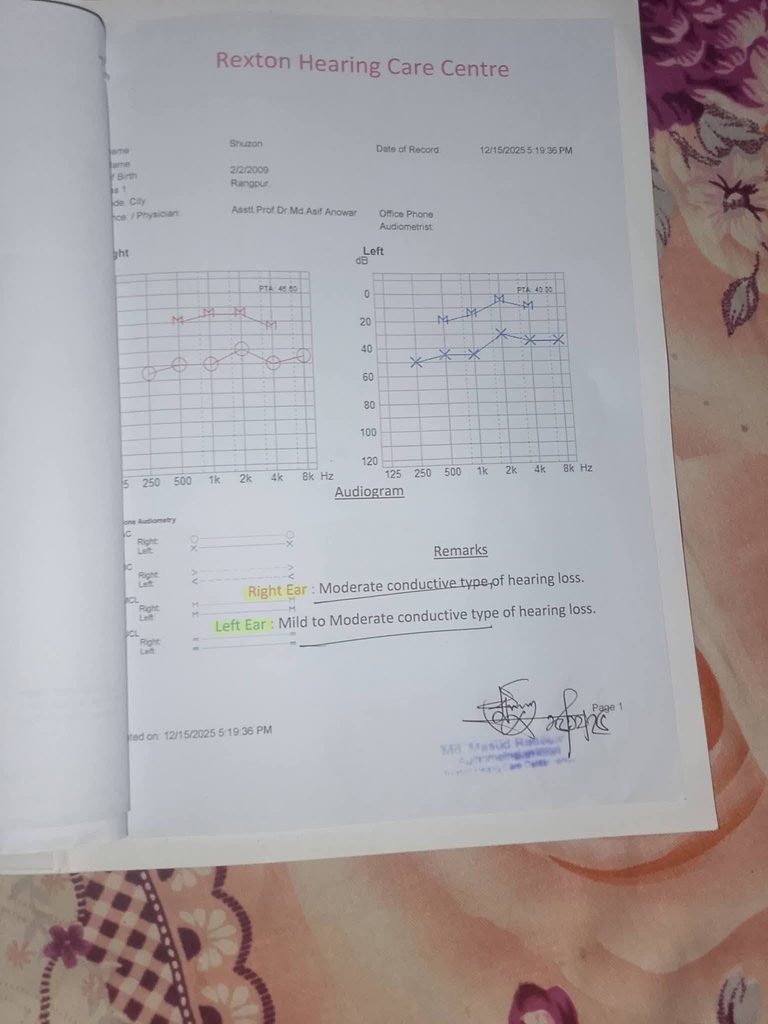
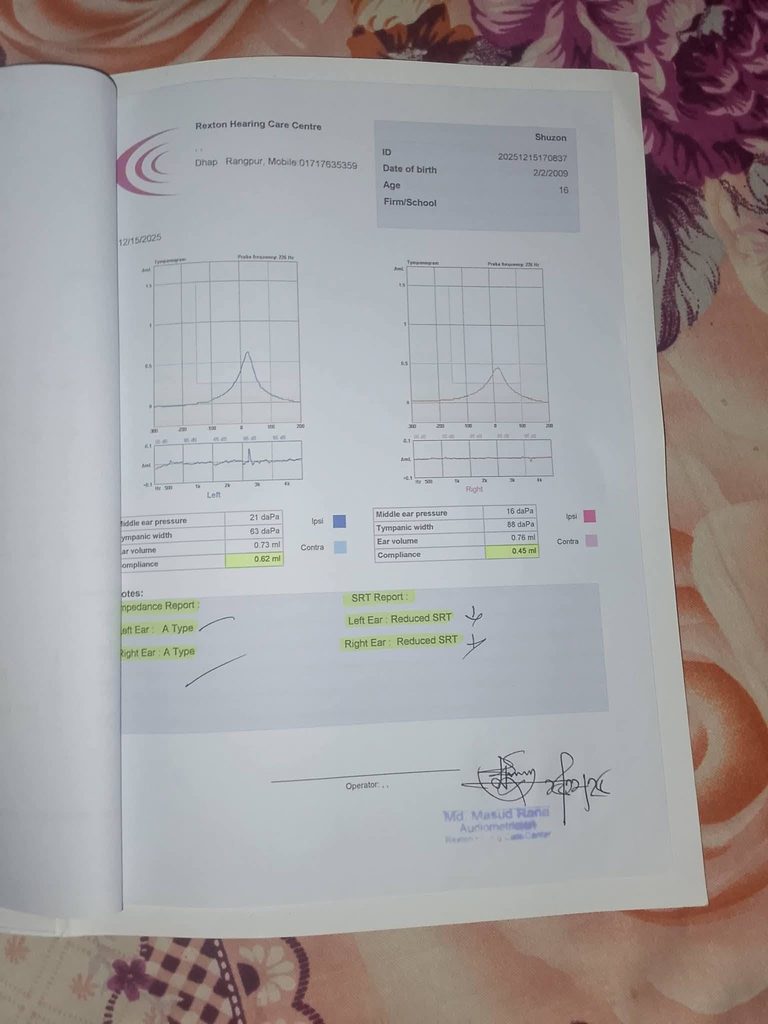
আমি দুইটি রিপোর্ট মিলিয়ে audiogram + tympanometry clinically review করেছি। এখানে hearing loss সত্যিই আছে, এবং patternটি bilateral conductive hearing loss-এর সঙ্গে যথেষ্ট পরিষ্কারভাবে মেলে। তবে কেন conductive loss হয়েছে—otosclerosis/stapes fixation, congenital ossicular abnormality, নাকি অন্য কোনো কারণ—এই দুই রিপোর্ট দিয়ে একা নিশ্চিত করা যাবে না। সেই অংশে ENT/otology work-up দরকার।
1. রিপোর্টে কোথায় abnormal আছে
| Test/Parameter | Report finding | বাংলা অর্থ | Clinical interpretation |
| Right PTA | প্রায় 48.6 dB HL | ডান কানে গড় শ্রবণসীমা প্রায় 49 dB | 🔴 Abnormal; moderate degree |
| Right ear | Moderate conductive hearing loss | ডান কানে মাঝারি মাত্রার পরিবাহী শ্রবণহানি | 🔴 Abnormal |
| Left PTA | 40 dB HL | বাম কানে গড় শ্রবণসীমা প্রায় 40 dB | 🔴 Abnormal; mild–moderate/borderline moderate |
| Left ear | Mild to Moderate conductive hearing loss | বাম কানে মৃদু থেকে মাঝারি পরিবাহী শ্রবণহানি | 🔴 Abnormal |
| Air–bone gap | দুই কানেই দৃশ্যমান | বাতাস দিয়ে শোনা bone conduction-এর তুলনায় খারাপ | 🔴 Conductive component-এর মূল evidence |
| Left tympanogram | Type A | বাম মধ্যকর্ণের pressure/compliance মোটামুটি স্বাভাবিক | 🟢 Essentially normal |
| Right tympanogram | Type A | ডান মধ্যকর্ণের pressure/compliance মোটামুটি স্বাভাবিক | 🟢 Essentially normal |
| SRT | “Reduced SRT” both ears | কথার শব্দ ধরতে স্বাভাবিকের তুলনায় বেশি intensity লাগছে বলে বোঝানো হয়েছে | 🔴 Abnormal/needs numerical confirmation |
Audiogram-এ right ear-এ bone conduction তুলনামূলক ভালো থাকা সত্ত্বেও air conduction প্রায় 40–55 dB HL range-এ, এবং left ear-এও প্রায় 30–50 dB HL air threshold দেখা যাচ্ছে—অর্থাৎ significant air–bone gap আছে। রিপোর্ট নিজেও right ear-কে “Moderate conductive” এবং left ear-কে “Mild to Moderate conductive” হিসেবে লিখেছে।
2. Tympanometry report — প্রতিটি মানের clinical meaning
Left ear
Middle-ear pressure: +21 daPa
বাংলা: মধ্যকর্ণের চাপ।
➡️ স্বাভাবিকের কাছাকাছি।
Tympanic width: 63 daPa
বাংলা: tympanic membrane/মধ্যকর্ণ system-এর pressure response-এর width।
➡️ উল্লেখযোগ্য abnormality নেই।
Ear canal volume: 0.73 mL
বাংলা: কানের বাইরের নালির কার্যকর volume।
➡️ Acceptable.
Compliance: 0.62 mL
বাংলা: eardrum + ossicular system কত সহজে নড়ছে।
➡️ স্বাভাবিক range-এর মধ্যে।
Right ear
Middle-ear pressure: +16 daPa
➡️ স্বাভাবিকের কাছাকাছি।
Tympanic width: 88 daPa
➡️ Acceptable.
Ear canal volume: 0.76 mL
➡️ Acceptable.
Compliance: 0.45 mL
➡️ Lower side of normal হলেও Type-A pattern-এর মধ্যে।
Report নিজেই উভয় কানকে “A Type” লিখেছে।
Type-A tympanogram মানে কী?
Type A = eardrum এবং middle-ear pressure/compliance মোটামুটি normal।
এটি গুরুত্বপূর্ণ, কারণ যদি middle ear-এ fluid/OME থাকত, সাধারণত tympanogram flat/Type-B অথবা negative-pressure Type-C pattern হওয়ার সম্ভাবনা বেশি। শিশু-কিশোরদের hearing evaluation-এ tympanometry middle-ear status নির্ণয়ে গুরুত্বপূর্ণ; flat tympanogram middle-ear effusion-এর সম্ভাবনা বাড়ায়।
অতএব এখানে simple middle-ear fluid/OME এই hearing loss-এর প্রধান explanation মনে হচ্ছে না।
3. Working Clinical Diagnosis
Final audiological diagnosis
Bilateral Conductive Hearing Loss, Right > Left
Right ear: Moderate conductive hearing loss
Left ear: Mild-to-moderate conductive hearing loss
with bilateral Type-A tympanograms.
বাংলায়:
দুই কানে পরিবাহী শ্রবণহানি — ডান কানে মাঝারি মাত্রার এবং বাম কানে মৃদু থেকে মাঝারি মাত্রার; তবে উভয় কানের tympanometry মোটামুটি স্বাভাবিক।
আমার confidence
Bilateral conductive hearing loss: 0.97 / 1.00
কারণ PTA-তে clear air–bone gap + report-এর own interpretation দুইটাই একই diagnosis support করছে।
4. সবচেয়ে গুরুত্বপূর্ণ প্রশ্ন — Type A থাকলেও Conductive Hearing Loss কেন?
এটাই এই case-এর মূল clinical point।
Normal/Type-A tympanogram + significant conductive air–bone gap থাকলে শুধু fluid বা infection চিন্তা করলে ভুল হবে। তখন বিশেষভাবে দেখতে হয়:
| Possible cause | এই case-এ probability |
| Stapes/ossicular fixation, including otosclerosis | 🟠 Moderate suspicion ~0.60–0.70 |
| Congenital ossicular-chain abnormality/fixation | 🟠 Moderate suspicion ~0.55–0.65 |
| Tympanosclerosis/other ossicular fixation | 🟡 Possible |
| Ossicular discontinuity after trauma | 🟡 Depends on trauma history |
| Third-window disorder, e.g. superior semicircular canal dehiscence | 🟡 Lower probability unless autophony/vertigo exists |
| Otitis media with effusion | 🔵 Relatively unlikely with bilateral Type-A |
| Primary sensorineural hearing loss | 🔵 Not the dominant pattern |
Otosclerosis/stapes fixation-এ conductive hearing loss-এর সঙ্গে normal Type-A বা shallow Type-As tympanogram পাওয়া যেতে পারে; conventional 226-Hz tympanometry একা ossicular/stapes fixation exclude করতে পারে না। Acoustic reflexes এবং HRCTসহ test battery diagnosisকে শক্তিশালী করে।
তবে একটি গুরুত্বপূর্ণ limitation
Patient-এর বয়স report অনুযায়ী প্রায় 16 বছর। এই বয়সে otosclerosis সম্ভব হলেও congenital ossicular abnormality বিশেষভাবে বিবেচনা করা দরকার যদি hearing problem ছোটবেলা থেকেই থাকে বা দীর্ঘদিন stable থাকে। Pediatric congenital ossicular malformation conductive hearing loss-এর established cause।
তাই আমি এখনই prescription-এ “Otosclerosis confirmed” লিখব না।
5. কোন history নিলে diagnosis অনেক পরিষ্কার হবে?
Clinical history এখানে diagnosis differentiate করবে:
ছোটবেলা থেকেই hearing কম → congenital ossicular anomaly ↑
ধীরে ধীরে progressively hearing কমছে → stapes fixation/otosclerosis ↑
Family history of similar hearing loss → otosclerosis/congenital cause ↑
Previous ear trauma → ossicular discontinuity ↑
Previous recurrent ear infection/discharge → chronic middle-ear pathology ↑
নিজের voice খুব loud লাগে, নিজের breathing/eye movement শোনা যায় (autophony), sound/pressure-এ vertigo → third-window disorder ↑
6. এখন Doctor-এর Action Plan
এখন সরাসরি ওষুধ দেওয়ার চেয়ে cause identify করা priority। AAP guidance অনুযায়ী adolescent-এর abnormal objective hearing test specialist audiology/ENT evaluation এবং definitive diagnostic work-up দাবি করে।
Step 1 — ENT/Otology examination
Otoscopy + preferably otomicroscopy
দেখতে হবে:
tympanic membrane normal কি না, wax, perforation, retraction, tympanosclerosis, congenital canal/TM abnormality আছে কি না।
Step 2 — Repeat/complete diagnostic audiology
আমি করাতাম:
Repeat Pure Tone Audiometry with proper masking
কারণ bilateral conductive loss-এ masked bone conduction দরকার।
Full Speech Audiometry
- Numerical SRT in dB HL
- Word Recognition Score / Speech Discrimination Score
বর্তমান রিপোর্টে শুধু “Reduced SRT” লেখা—actual SRT dB নেই, তাই এটি incomplete।
Acoustic/Stapedial Reflex — Ipsilateral + Contralateral
এটি এই case-এ বিশেষ গুরুত্বপূর্ণ।
Conductive loss + Type-A + absent acoustic reflex → stapes/ossicular fixation suspicion বাড়ায়। Otosclerosis evaluation-এ pure-tone audiometry, tympanometry এবং acoustic reflex একসঙ্গে ব্যবহার করা হয়।
7. সবচেয়ে useful additional investigation
HRCT Temporal Bone — thin-section, without contrast
ENT examination এবং repeat audiology-তে conductive hearing loss persist করলে এটি সবচেয়ে informative imaging হবে।
দেখবে:
Stapes fixation/otosclerosis
Congenital ossicular-chain malformation
Ossicular discontinuity
Tympanosclerosis
Round/oval window abnormality
Third-window lesion
ACR Appropriateness Criteria অনুযায়ী acquired conductive hearing loss without an obvious middle-ear mass-এ CT temporal bone without IV contrast “Usually Appropriate”।
আমি routine CT brain করতাম না; dedicated HRCT temporal bone চাই।
8. Optional investigations — clinical indication থাকলে
OAE করা যেতে পারে cochlear outer-hair-cell function সম্পর্কে অতিরিক্ত তথ্যের জন্য, যদিও conductive component থাকলে OAE absent/reduced হতে পারে।
ABR দরকার হতে পারে যদি behavioural PTA reliability নিয়ে সন্দেহ থাকে; routineভাবে প্রয়োজন নেই যদি audiogram reliable হয়। AAP abnormal/inaccurate behavioural testing-এর ক্ষেত্রে electrophysiologic testing বিবেচনা করে।
VEMP দরকার হবে যদি autophony, pressure-induced vertigo, sound-induced vertigo বা suspected third-window syndrome থাকে।
9. Treatment Plan
এখন কোনো specific drug indication নেই
এই report দেখে আমি antibiotic, antihistamine, steroid, decongestant routineভাবে শুরু করব না, কারণ report middle-ear infection বা effusion demonstrate করছে না।
Treatment cause-specific হবে।
যদি stapes fixation / otosclerosis confirmed হয়
দুটি established option:
Conventional hearing aid — hearing rehabilitation-এর effective non-surgical option।
Stapedotomy/stapes surgery — appropriately selected patient-এ conductive component improve করতে পারে; তবে 16-year-old patient হওয়ায় pediatric otologist/experienced otologist-এর assessment এবং diagnosis confirmation ছাড়া surgery decision নেওয়া উচিত নয়। Otosclerosis task-force guidance hearing aids ও stapes surgery দুটোকেই management option হিসেবে স্বীকার করে।
যদি congenital ossicular anomaly হয়
Management হতে পারে:
hearing aid অথবা selected patient-এ ossiculoplasty/stapes reconstruction, anatomy ও HRCT finding অনুযায়ী। Recent pediatric otology literature-এ congenital middle-ear anomalies-এর জন্য both hearing rehabilitation and surgical reconstruction ব্যবহৃত হয়।
Patient jante chasse এ রিপোর্ট যে সমস্যা আছে সেটা থেকে ভালো হওয়ার উপায় আছে কি থাকলে কেউ পরামর্শ দেন আমি রংপুর মেডিকেল কলেজ হাসপাতালে দিখায়ছে তারা বলছে মেশিন লাগবে মেশিন ছাড়া ঔষধ দিয়ে ঠিক করা যাবে কি reply ki dibo bolo?
এভাবে reply দিতে পারেন:
“রিপোর্ট অনুযায়ী দুই কানে conductive hearing loss আছে—ডান কানে বেশি। এই ধরনের সমস্যায় শুধু ওষুধ দিয়ে সবসময় ঠিক হয় না, কারণ অনেক সময় কানের ভেতরের sound-conduction system/ossicle বা stapes-এর mechanical problem থাকতে পারে। আপনার রিপোর্টে middle-ear fluid বা infection-এর স্পষ্ট প্রমাণ নেই, তাই শুধু antibiotic/medicine খেয়ে পুরো hearing স্বাভাবিক হওয়ার সম্ভাবনা কম।
Rangpur Medical College থেকে যে ‘মেশিন’ বলেছে, সেটা সম্ভবত hearing aid—এতে শোনার ক্ষমতা ভালো করা যায়। তবে hearing aid নেওয়ার আগে একজন ENT specialist, preferably Otologist-এর কাছে আরেকবার দেখানো ভালো। প্রয়োজন হলে repeat hearing test, acoustic reflex এবং HRCT temporal bone করে দেখা যায় কোনো surgically correctable cause আছে কি না। কিছু ক্ষেত্রে operation করে hearing improve করা যায়, আবার কিছু ক্ষেত্রে hearing aid-ই best option।
তাই ‘ওষুধে ঠিক হবে কি না’—উত্তর হলো: এই রিপোর্ট অনুযায়ী medicine alone দিয়ে সম্পূর্ণ ঠিক হওয়ার সম্ভাবনা কম; আগে কারণটা নিশ্চিত করতে হবে।”
prescription e final dx ki likhbo?
Prescription-এ final/working Dx হিসেবে লিখুন:
Dx: Bilateral Conductive Hearing Loss (R > L) — Moderate CHL in Right Ear and Mild-to-Moderate CHL in Left Ear, with bilateral Type-A tympanogram.
বাংলায়: দুই কানে conductive hearing loss; ডান কানে বেশি—ডানে মাঝারি এবং বামে মৃদু থেকে মাঝারি মাত্রার শ্রবণহানি।
আরও clinically safe করে লিখতে চাইলে:
Bilateral Conductive Hearing Loss (R>L), etiology under evaluation.
“Otosclerosis” এখনই final Dx হিসেবে লিখবেন না, কারণ বর্তমান audiogram/tympanometry দিয়ে cause নিশ্চিত হয়নি। Confidence: 0.97 for bilateral conductive hearing loss.
10. কোন Doctor-এর কাছে refer করবেন?
Best referral
ENT Specialist → preferably Otologist/Neurotologist / Pediatric ENT with otology experience
শুধু hearing-aid centre-এ সীমাবদ্ধ না রেখে ENT medical evaluation অবশ্যই করানো উচিত, কারণ conductive loss potentially surgically correctable cause-এর জন্য হতে পারে।
Audiologist follow-up একইসঙ্গে থাকবে।
11. Prescription-এ Dx কী লিখবেন?
সবচেয়ে clinically defensible wording:
Dx: Bilateral Conductive Hearing Loss (R > L) — Right Moderate, Left Mild–Moderate; bilateral Type-A tympanograms. Etiology to be evaluated.
বাংলা:
দুই কানে পরিবাহী শ্রবণহানি; ডান কানে বেশি—ডানে মাঝারি এবং বামে মৃদু-মাঝারি মাত্রা। উভয় কানে Type-A tympanogram। কারণ নির্ণয়ের জন্য further otological evaluation প্রয়োজন।
“Bilateral otosclerosis” এখনই final diagnosis হিসেবে লেখা ঠিক হবে না।
12. Referral Note — Prescription-এ এভাবে লিখতে পারেন
Refer to ENT/Otology:
16-year-old with bilateral conductive hearing loss on PTA, R > L; Right PTA ≈48.6 dB HL (moderate), Left PTA ≈40 dB HL (mild–moderate), with significant air–bone gaps. Tympanometry shows bilateral Type-A curves (L: MEP +21 daPa, compliance 0.62 mL; R: MEP +16 daPa, compliance 0.45 mL). Kindly evaluate for ossicular/stapes fixation vs congenital ossicular-chain abnormality. Please perform otomicroscopy, repeat masked PTA + full speech audiometry and acoustic reflexes; consider HRCT temporal bones without contrast if clinically indicated.
এটাই referral-এর জন্য সবচেয়ে clinically useful note।
Overview / Summary
এই report-এর মূল abnormality হলো bilateral conductive hearing loss। Right ear বেশি affected: PTA ≈48.6 dB, moderate CHL; left ear PTA ≈40 dB, mild–moderate CHL। কিন্তু bilateral tympanogram Type A, অর্থাৎ obvious middle-ear effusion/negative pressure পাওয়া যাচ্ছে না।
সুতরাং underlying ossicular/stapes problem বিশেষভাবে investigate করা দরকার। Audiological diagnosis-এর confidence 97%, কিন্তু exact structural cause-এর confidence বর্তমানে প্রায় 60–65% range, তাই CT/ENT examination ছাড়া cause final করা উচিত নয়।
Actionable Plan / Steps
ENT/Otologist referral → Otoscopy/Otomicroscopy → Repeat masked PTA → numerical SRT + Word Recognition → Ipsilateral/Contralateral Acoustic Reflex → persistent unexplained CHL হলে HRCT Temporal Bone without contrast → তারপর cause অনুযায়ী Hearing Aid বনাম corrective ear surgery decision।
বর্তমান report-এর ভিত্তিতে empiric antibiotic/steroid/decongestant treatment-এর indication আমি দেখছি না।
Reference List
Textbooks: Dhingra PL, Dhingra S. Diseases of Ear, Nose and Throat & Head and Neck Surgery, 8th ed. Chapters on hearing assessment, conductive deafness and otosclerosis. Cummings Otolaryngology—Head & Neck Surgery, current edition, sections on conductive hearing loss, ossicular disorders and otosclerosis. Nelson Textbook of Pediatrics, current edition, section on hearing impairment in children/adolescents.
Guidelines: Bower C, et al. Hearing Assessment in Infants, Children, and Adolescents: Recommendations Beyond Neonatal Screening. Pediatrics. 2023;152:e2023063288. DOI: 10.1542/peds.2023-063288. ACR Appropriateness Criteria® Hearing Loss and/or Vertigo. J Am Coll Radiol. 2018;15:S321-S331. DOI: 10.1016/j.jacr.2018.09.020.
Peer-reviewed: Silva VAR, et al. Brazilian Society of Otology task force—Otosclerosis: evaluation and treatment. Braz J Otorhinolaryngol. 2023;89:101303. DOI: 10.1016/j.bjorl.2023.101303. Forli F, et al. Issues in the audiological assessment of otosclerosis. Acta Otorhinolaryngol Ital. 2025;45:S40-S48. DOI: 10.14639/0392-100X-supp1_3-45-2025-A1337. Ito T, et al. Ossiculoplasty for congenital middle-ear malformations. Otolaryngol Clin North Am. 2026;59:409-416. DOI: 10.1016/j.otc.2025.11.002.
Md.Rafiqul Islam Lipu