পায়ে দুর্বলতা: একই উপসর্গ, ভিন্ন রোগ!
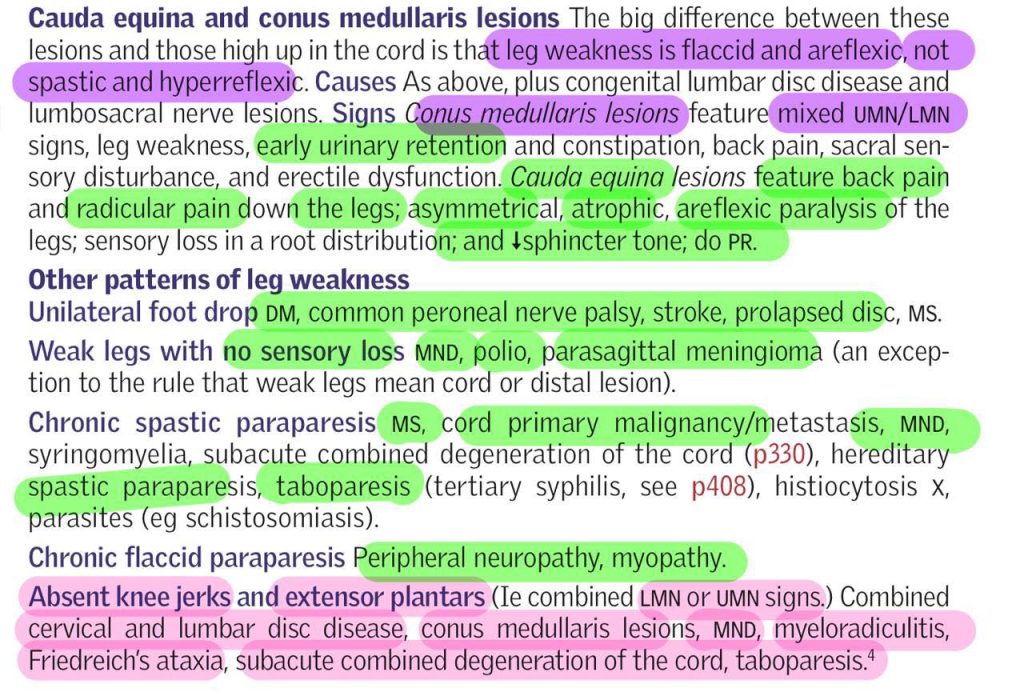
রোগী যখন বলে, “ডাক্তার, পা দুটো ঠিকমতো কাজ করে না,” তখন আপনার মাথায় হাজারটা সম্ভাবনা ঘুরে বেড়ায়। এটা কি spinal cord-এর সমস্যা? না কি nerve root? peripheral nerve? নাকি muscle?
এই লেখায় আমরা আলোচনা করব—leg weakness-এর নিউরোলজিক্যাল প্যাটার্নগুলো নিয়ে, যেখানে প্রতিটা রোগের সিগনেচার বৈশিষ্ট্য আছে। আর মূল ফোকাস থাকবে—Cauda Equina vs Conus Medullaris lesions পার্থক্যটা ধরতে পারা।
প্রথম ধাপ: প্রশ্ন করুন—Spastic, না Flaccid?
এই প্রথম প্রশ্নটাই অনেক কিছু বলে দেয়।
• Spastic weakness মানে upper motor neuron (UMN) involvement
• Flaccid weakness মানে lower motor neuron (LMN), root, plexus, বা peripheral nerve
তাহলে এখন মূল দুইজন খেলোয়াড়ের গল্পে আসা যাক।
Cauda Equina vs Conus Medullaris: দুইটা cord-end syndrome
দুজনেই lower back এর lesion—but behavior আলাদা।
Conus Medullaris Syndrome (CMS): Symmetrical but sinister
Location: L1 vertebral level-এ spinal cord-এর cone-shaped end।
Etiology: spinal fracture, central disc herniation, intradural tumor, demyelination
Clinical features:
• Leg weakness: symmetrical, may show both UMN + LMN signs (mixed picture)
• Bladder/bowel: urgency, retention — এটা early feature
• Sensory: perianal numbness (“saddle anesthesia”)
• Reflexes: knee jerk preserved or ↓, plantar often extensor
• Sexual dysfunction: common
Clinical clue: urinary problem আগে আসে, weakness পরে।
Cauda Equina Syndrome (CES): Asymmetrical and painful
Location: L2 vertebral level-এ spinal cord শেষ হয়ে যায়, এরপর শুরু হয় bundle of nerve roots—cauda equina
Etiology: central disc prolapse (especially massive), trauma, tumor compressing roots
Clinical features:
• Leg weakness: asymmetrical, flaccid, areflexic
• Bladder/bowel: late involvement
• Sensory: root-level dermatomal loss, saddle anesthesia may occur
• Pain: severe back pain + radicular pain down one or both legs
• Reflexes: absent ankle reflex, knee may be normal/low
Clinical clue: আগে আসবে pain + sensory symptoms, পরে bladder issue।
Clinical clues that save your diagnosis
• If the plantar response is extensor, but knee jerk is absent, think mixed UMN + LMN = conus or cervical+lumbar lesion, or MND
• Only foot drop? Think local—peroneal nerve, L5 root, stroke
• Weak legs, no sensory loss? Think anterior horn or motor cortex—MND, polio, parasagittal meningioma
• Spastic paraparesis? MS, subacute combined degeneration (B12 deficiency), spinal tumor, hereditary spastic paraplegia
চেনা অচেনা আরও কিছু প্যাটার্ন
১. Unilateral Foot Drop
• Cause: Diabetes, common peroneal nerve palsy, L5 radiculopathy, cortical stroke
• Sign: Weak dorsiflexion, sensory loss over dorsum of foot
২. Symmetrical Weak Legs with No Sensory Loss
• Causes: Motor Neuron Disease (MND), old polio, parasagittal meningioma
• Red flag: MND will often have fasciculations, wasting, brisk reflexes
৩. Chronic Spastic Paraparesis
• Think: MS, cord compression, subacute combined degeneration (B12), hereditary spastic paraplegia
• Key finding: Bilateral ↑ tone, ↑ reflexes, extensor plantar
৪. Chronic Flaccid Paraparesis
• Causes: Peripheral neuropathy, myopathy
• Signs: ↓ tone, ↓ reflexes, distal wasting
৫. Absent Knee Jerk + Extensor Plantar
Mixed sign → Think:
• Combined cervical + lumbar disc
• Conus medullaris
• MND
• Subacute combined degeneration
• Friedreich’s ataxia
Diagnosis: কীভাবে এগোবেন ধাপে ধাপে
১. History: onset, symmetry, bladder/bowel, back pain
২. Examination: tone, reflexes, plantar response, sensory map
৩. Urgent MRI: Lumbosacral spine first, cervical if needed
৪. NCS/EMG: peripheral vs root vs cord
৫. Blood tests: B12, HbA1c, VDRL, HIV, ANA if autoimmune suspected
Management: যত তাড়াতাড়ি, তত ভালো ফল
• CES/CMS: Surgical decompression জরুরি → delay করলে bladder damage স্থায়ী হতে পারে
• MS: Immunomodulators
• B12 deficiency: Parenteral replacement
• Peripheral neuropathy: Treat underlying cause, physiotherapy
• MND: Supportive, Riluzole
Raiyyan Tahsan.Date:-07-05-2025 Wednesday Time:-03-49-55 Pm