জাহেদ ২৮ বছর, তার ভাষ্যমতে পিঠের উপরে জায়গায় গোলাকার র্যাশ উঠেছে, সাথে চুলকানি ছিলো,
Image attached:-
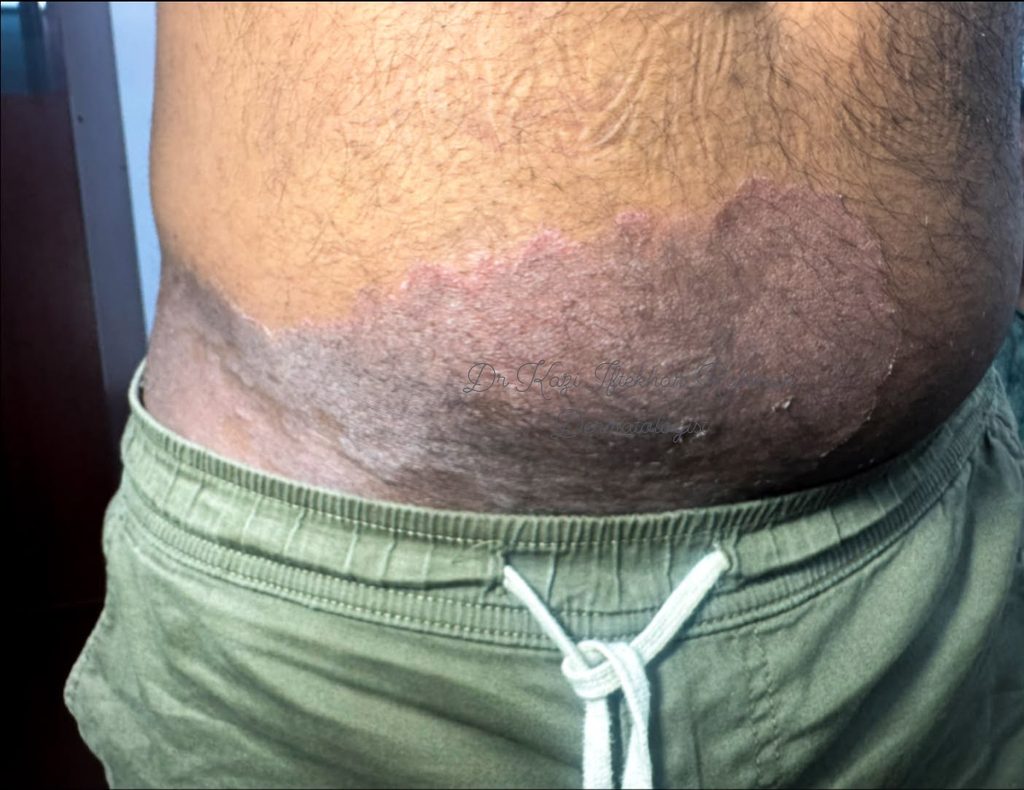
Econate plus (Econazole + Triamcinolone ) ক্রিম ব্যবহার করেছেন, প্রথম দুই দিন ক্রিম ব্যবহার এর ফলে চুলকানি কমে যায়, lesion ও কমে যায়, তবে lesion এর জায়গা কালো হয়ে যায়, ১০-১২ দিন পর আবার চুলকানী শুরু হয়েছে, Dx and Rx কি?
এইটার Diagnosis – Tinea incognito
Tinea তে steroid দিলে Tinea severely aggravated হয়,
প্রথম ৫-৭ দিনে খুব ভালো আরাম পাওয়া যায়, পরে তা অনেক বেড়ে যায়, এবং primary lesion আর বুঝা যায়না,
একটা Dark itchy rash নিয়ে পেশেন্ট চেম্বারে আসবে-
যে কোনো টিনিয়াতে কোনো steroid লাগানো যাবেনা
pevison, econat plus, dermasol, Topiclo. এই গুলি সব steroid ক্রিম, এইগুলি লাগালে এমন ভয়াবহ পরিস্থিতি হয়, এই ক্ষেত্রে Diagnosis হবে Tinea incognito.,
Tinea incognito চিকিৎসা কি?
১… steroid ক্রিম চলমান থাকলে প্রথমে তা বন্ধ করবে,
২.. systemic and topical antifungal দিবে,
৩.. এন্টি হিস্টামিন দিবে,
এই পেশেন্ট এর ক্ষেত্রে চিকিৎসা হবে-
Terbinafine:
Tablet 1:- Mycofin 250mg (AS A Terbinafine Hydrochloride Other Antifungal preparations, Topical Antifungal preparations).
0+0+1 (4 weeks)
Indications of Tablet :- Mycofin 250mg (AS A Terbinafine Hydrochloride Other Antifungal preparations, Topical Antifungal preparations).
Mycofin tablet: This tablet is indicated for the treatment of onychomycosis of the toenail or fingernail due to dermatophytes (tinea unguium).
Mycofin granules: This is indicated in Tinea Capitis.
Mycofin cream: Fungal infection of the skin caused by Trichophyton (e.g. T. rubrum, T. mentagrophytes, T. verrucosum, T. violaceum), Microsporum canis and Epidermophyton floccosum. Yeast infections of the skin, principally those caused by the genus Candida (e.g. C. albicans). Pityriasis (tinea) versicolor due to Pityrosporum orbicular (also known as Malassezia furfur).
Mycofin 1% Spray: This spray is indicated in the treatment of tinea infections of the skin. This spray is also indicated in the treatment of pityriasis (tinea) versicolor due to Malassezia furfur.
Pharmacology of Tablet :- Mycofin 250mg (AS A Terbinafine Hydrochloride Other Antifungal preparations, Topical Antifungal preparations).
Terbinafine, an Allylamine antifungal, inhibits biosynthesis of Ergosterol (an essential component of fungai cell membrane) via inhibition of Squalene Epoxidase enzyme. This results in fungal cell death primarily due to the increased membrane permeability mediated by the accumulation of high concentrations of Squalene but not due to Ergosterol deficiency. Depending on the concentration of the drug and the fungal species test in vitro, Terbinafine hydrochloride may be fungicidal. However, the clinical significance of in vitro data is unknown. Terbinafine has been shown to be active against most strains of the following microorganisms both in vitro and in clinical infections: Tricophyton Mentagrophyte, Trichophyton Rubrum.
Dosage & Administration of Tablet :- Mycofin 250mg (AS A Terbinafine Hydrochloride Other Antifungal preparations, Topical Antifungal preparations).
Terbinafine tablet:
- For the treatment of fingernail onychomycosis: Terbinafine 250 mg (one tablet), once daily for 6 weeks.
- For the treatment of toenail onychomycosis: Terbinafine 250 mg (one tablet), once daily for 12 weeks.
- The optimal clinical effect is seen some months after mycological cure and cessation of treatment. This is related to the period required for the outgrowth of healthy nail.
Terbinafine granules:
- Body Weight: <25 kg: 125 mg/day up to 6 weeks
- Body Weight: 25-35 kg: 187.5 mg/day up to 6 weeks
- Body Weight: >35 kg: 250 mg/day up to 6 weeks
Terbinafine cream: Terbinafine cream can be applied once or twice daily. Cleanse and dry the affected areas thoroughly before application of the terbinafine cream. Apply the cream to the affected skin and the surrounding area in a thin layer and rub in lightly. In the case of intertriginous infections (submammary, interdigital, intergluteal, inguinal) the application may be covered with a gauze strip, especially at night. The likely durations of treatment are as follows:
- Tinea corporis, cruris: 1 to 2 weeks
- Tinea pedis: 1 week
- Cutaneous candidiasis: 2 weeks
- Pityriasis versicolor: 2 weeks
Relief of the clinical symptoms usually occurs within a few days. Irregular use or premature discontinuation of treatment carries the risk of recurrence. If there are no signs of improvement after two weeks, the diagnosis should be verified.
Terbinafine 1% Spray: This spray is applied once or twice daily, depending on the indication. The affected areas should be cleansed and dried thoroughly before application of this spray. A sufficient amount of solution should be applied to wet the treatment area(s) thoroughly.
- Tinea pedis: once a day,1 week
- Tinea corporis/cruris: once a day,1 week
- Pityriasis versicolor: twice a day, 1 week
Relief of clinical symptoms usually occurs within a few days. If there are no signs of improvement after two weeks the diagnosis should be verified.
Interaction of Tablet :- Mycofin 250mg (AS A Terbinafine Hydrochloride Other Antifungal preparations, Topical Antifungal preparations).
In vivo studies have shown that terbinafine is an inhibitor of the CYP450 2D6 isozyme. Drugs predominantly metabolized by the CYP450 2D6 isozyme include the following drug classes: tricyclic antidepressants, selective serotonin reuptake inhibitors, beta-blockers, antiarrhythmics class 1C (e.g., flecainide and propafenone) and monoamine oxidase inhibitors Type B. Co-administration of terbinafine should be done with careful monitoring and may require a reduction in dose of the 2D6-metabolized drug.
Contraindications of Tablet :- Mycofin 250mg (AS A Terbinafine Hydrochloride Other Antifungal preparations, Topical Antifungal preparations).
Terbinafine tablet and cream are contra-indicated in individuals with hypersensitive to terbinafine.
Side Effects of Tablet :- Mycofin 250mg (AS A Terbinafine Hydrochloride Other Antifungal preparations, Topical Antifungal preparations).
The adverse events reported encompass gastrointestinal symptoms (including diarrhea, dyspepsia and abdominal pain), liver test abnormalities, rashes, urticaria, pruritus, and taste disturbances. In general, the adverse events were mild, transient, and did not lead to discontinuation. Adverse events, based on worldwide experience with terbinafine use, include: idiosyncratic and symptomatic hepatic injury and more rarely, cases of liver failure, some leading to death or liver transplant, serious skin reactions, severe neutropenia, thrombocytopenia, angioedema and allergic reactions (including anaphylaxis). Other adverse reactions that have been reported include malaise, fatigue, vomiting, arthralgia, myalgia, and hair loss.
Pregnancy & Lactation of Tablet :- Mycofin 250mg (AS A Terbinafine Hydrochloride Other Antifungal preparations, Topical Antifungal preparations).
Terbinafine tablet: There are no adequate and well-controlled studies in pregnant women. Because animal reproduction studies are not always predictive of human response, and because treatment of onychomycosis can be postponed until after pregnancy is completed, it is recommended that terbinafine not be initiated during pregnancy. After oral administration, terbinafine is present in the breast milk of nursing mothers. Treatment with terbinafine is not recommended in nursing mothers.
Terbinafine cream: Foetal toxicity and fertility studies in animals suggest no adverse effects. There is no clinical experience with terbinafine in pregnant women; therefore, unless the potential benefits outweigh any potential risk, terbinafine should not be administered. Terbinafine is excreted in breast milk and therefore mothers should not receive terbinafine treatment whilst breast-feeding.
Precautions & Warnings of Tablet :- Mycofin 250mg (AS A Terbinafine Hydrochloride Other Antifungal preparations, Topical Antifungal preparations).
Warnings–
- Mycofin tablets: Rare cases of liver failure, some leading to death or liver transplant, have occurred with the use of terbinafine tablets for the treatment of onychomycosis in individuals with and without preexisting liver disease. In the majority of liver cases reported in association with terbinafine use, the patients had serious underlying systemic conditions and an uncertain causal association with terbinafine. The severity of hepatic events and/or their outcome may be worse in patients with active or chronic liver disease. Treatment with terbinafine tablets should be discontinued if there is biochemical or clinical evidence of liver injury. There have been isolated reports of serious skin reaction (e.g., Stevens-Johnson Syndrome and toxic epidermal necrolysis). If progressive skin rash occurs, treatment with terbinafine should be discontinued.
- Mycofin cream: Mycofin cream is for external use only. Contact with the eyes should be avoided.
Precautions: Mycofin are not recommended for patients with chronic or active liver disease. Before prescribing Mycofin, pre-existing liver disease should be assessed. Hepatotoxicity may occur in patients with and without pre-existing liver disease. Pretreatment serum transaminase (ALT and AST) teste are advised for all patients before taking terbinafine tablets.
Use in Special Populations
Pediatric use: The safety and efficacy of terbinafine have not been established in pediatric patients.
Use in the elderly: There is no evidence to suggest that elderly patients require different dosages or experience side-effects different to those of younger patients.
Overdose Effects of Tablet :- Mycofin 250mg (AS A Terbinafine Hydrochloride Other Antifungal preparations, Topical Antifungal preparations).
Clinical experience regarding overdose with terbinafine tablets is limited. Doses up to 5 gm (20 times the therapeutic daily dose) have been taken without inducing serious adverse reactions. The symptoms of overdose included nausea, vomiting, abdominal pain, dizziness, rash, frequent urination, and headache.
Therapeutic Class of Tablet :- Mycofin 250mg (AS A Terbinafine Hydrochloride Other Antifungal preparations, Topical Antifungal preparations).
Other Antifungal preparations, Topical Antifungal preparations
Cream 2:Nafgal 2% 30gm Tube (AS A Naftifine Hydrochloride AS A Topical Antifungal preparations).
দিন ২ বার ৬ সপ্তাহ,
Indications of Cream :-Nafgal 2% 30gm Tube (AS A Naftifine Hydrochloride AS A Topical Antifungal preparations).
Nafgal cream is an allylamine antifungal indicated for the treatment of interdigital tinea pedis, tinea cruris, and tinea corporis caused by the organism Trichophyton Rubrum.
Description of Cream :-Nafgal 2% 30gm Tube (AS A Naftifine Hydrochloride AS A Topical Antifungal preparations).
Nafgal is a synthetic, broad spectrum, antifungal agent and allylamine derivative. The following in vitro data are available, but their clinical significance is unknown. Nafgal has been shown to exhibit fungicidal activity in vitro against a broad spectrum of organisms including Trichophyton rubrum, Trichophyton mentagrophytes, Trichophyton tonsurans, Epidermophyton floccosum, and Microsporum canis, Microsporum audouini, and Microsporum gypseum; and fungistatic activity against Candida species including Candida albicans. However it is only used to treat the organisms listed in the indications.
Pharmacology of Cream :-Nafgal 2% 30gm Tube (AS A Naftifine Hydrochloride AS A Topical Antifungal preparations).
The exact mechanism of action against fungi is not known, Naftifine Hydrochloride appears to interfere with sterol biosynthesis by inhibiting the enzyme squalene 2, 3-epoxidase. This inhibition of enzyme activity results in decreased amounts of sterols, especially ergosterol and a corresponding accumulation of squalene in the cells.
Dosage & Administration of Cream :-Nafgal 2% 30gm Tube (AS A Naftifine Hydrochloride AS A Topical Antifungal preparations).
Apply a thin layer of Naftifine Hydrochloride Cream once-daily to the affected areas plus half inch margin of healthy surrounding skin for 2 weeks or as directed by the physician.
Use in Children and Adolescents: The safety and effectiveness of Naftifine Hydrochloride have been established
in the age group of 12-17 years with interdigital tinea pedis and tinea cruris.
Interaction of Cream :-Nafgal 2% 30gm Tube (AS A Naftifine Hydrochloride AS A Topical Antifungal preparations).
No information is available.
Side Effects of Cream :-Nafgal 2% 30gm Tube (AS A Naftifine Hydrochloride AS A Topical Antifungal preparations).
The most common adverse reaction (≥1%) is pruritus.
Pregnancy & Lactation of Cream :-Nafgal 2% 30gm Tube (AS A Naftifine Hydrochloride AS A Topical Antifungal preparations).
Pregnancy Category B. There are no adequate and well-controlled studies of Naftifine Cream in pregnant women. Because animal reproduction studies are not always predictive of human response, Naftifine Cream should be used during pregnancy only if the potential benefit justifies the potential risk to the fetus. It is not known whether this drug is excreted in human milk. Because many drugs are excreted in human milk, caution should be exercised when Naftifine Cream is administered to a nursing woman.
Precautions & Warnings of Cream :-Nafgal 2% 30gm Tube (AS A Naftifine Hydrochloride AS A Topical Antifungal preparations).
If irritation or sensitivity develops with the use of Nafgal Cream, treatment should be discontinued.
Overdose Effects of Cream :-Nafgal 2% 30gm Tube (AS A Naftifine Hydrochloride AS A Topical Antifungal preparations).
An overdose of Nafgal topical is not expected to be dangerous.
Therapeutic Class of Cream :-Nafgal 2% 30gm Tube (AS A Naftifine Hydrochloride AS A Topical Antifungal preparations).
Topical Antifungal preparations
Tablet 3: Xyril 10 mg (AS A Hydroxyzine Hydrochloride AS A Sedating Anti-histamine).
0+0+1 (3 weeks)
Indications of Tablet : Xyril 10 mg (AS A Hydroxyzine Hydrochloride AS A Sedating Anti-histamine).
Xyril Hydrochloride is indicated-
- For symptomatic relief of anxiety and tension associated with psychoneurosis and as an adjunct in organic disease states in which anxiety is manifested.
- Management of pruritus due to allergic conditions such as chronic urticaria and atopic and contact dermatoses, and histamine-mediated pruritus.
- As a sedative when used as premedication and following general anesthesia.
The effectiveness of Xyril as an antianxiety agent for long-term use (>4 months) has not been assessed by systematic clinical studies. The physician should reassess periodically the usefulness of the drug for the individual patient.
Pharmacology of Tablet : Xyril 10 mg (AS A Hydroxyzine Hydrochloride AS A Sedating Anti-histamine).
Hydroxyzine Hydrochloride is an anxiolytic antihistamine of the piperazine class which is a H1 receptor antagonist. Hydroxyzine is not a cortical depressant, but its action may be due to a suppression of activity in certain key regions of the subcortical area of the central nervous system. Primary skeletal muscle relaxation has been demonstrated experimentally. Bronchodilator activity and antihistaminic and analgesic effects have been demonstrated experimentally and confirmed clinically. An antiemetic effect, both by the apomorphine test and the veriloid test, has been demonstrated. Hydroxyzine is rapidly absorbed from the gastrointestinal tract and clinical effects are usually noted within 15 to 30 minutes after oral administration.
Dosage & Administration of Tablet : Xyril 10 mg (AS A Hydroxyzine Hydrochloride AS A Sedating Anti-histamine).
For symptomatic relief of anxiety and tension-
- Adults: 50-100 mg 4 times daily.
- Children (>6 years): 50-100 mg (5-10 teaspoonfuls) daily in divided doses.
- Children (<6 years): 50 mg (5 teaspoonfuls) daily in divided doses.
Pruritus due to allergic conditions-
- Adults: 25 mg 3 to 4 times daily.
- Children ( 6 years): 50-100 mg (5-10 teaspoonfuls) daily in divided doses.
- Children (<6 years): 50 mg (5 teaspoonfuls) daily in divided doses.
As a sedative (premedication and following general anesthesia)-
- Adults: 50-100 mg.
- Children: 0.6 mg/kg of body weight.
Interaction of Tablet : Xyril 10 mg (AS A Hydroxyzine Hydrochloride AS A Sedating Anti-histamine).
Xyril may potentiate Meperidine and barbiturates, so their use in pre-anesthetic adjunctive therapy should be modified on an individual basis. Atropine and other belladonna alkaloids are not affected by the drug. Xyril is not known to interfere with the action of digitalis in any way and it may be used concurrently with this agent. Simultaneous administration of Xyril with monoamine oxidase inhibitors should be avoided.
Contraindications of Tablet : Xyril 10 mg (AS A Hydroxyzine Hydrochloride AS A Sedating Anti-histamine).
Hydroxyzine is contraindicated in patients with a known hypersensitivity to Hydroxyzine or any of its ingredients.
Side Effects of Tablet : Xyril 10 mg (AS A Hydroxyzine Hydrochloride AS A Sedating Anti-histamine).
Side effects reported with the administration of Xyril Hhydrochloride are usually mild and transitory in nature. More common side effects include drowsiness, headache, psychomotor impairment, and antimuscarinic effects such as urinary retention, dry mouth, blurred vision, and gastrointestinal disturbances. Other rare side-effects of antihistamines include hypotension, palpitation, arrhythmias, extrapyramidal effects, dizziness, confusion, depression, sleep disturbances, tremor, convulsions, hypersensitivity reactions (including bronchospasm, angioedema, and anaphylaxis, rashes, and photosensitivity reactions), blood disorders, liver dysfunction, and angle-closure glaucoma.
Pregnancy & Lactation of Tablet : Xyril 10 mg (AS A Hydroxyzine Hydrochloride AS A Sedating Anti-histamine).
Clinical data in human beings are inadequate to establish safety in early pregnancy. Until such data are available, Hydroxyzine is contraindicated in early pregnancy. It is not known whether this drug is excreted in human milk. Since many drugs are so excreted, Hydroxyzine should not be given to nursing mothers.
Precautions & Warnings of Tablet : Xyril 10 mg (AS A Hydroxyzine Hydrochloride AS A Sedating Anti-histamine).
The potentiating action of Xyril must be considered when the drug is used in conjunction with central nervous system depressants such as narcotics, non-narcotic analgesics, and barbiturates. Therefore, when central nervous system depressants are administered concomitantly with Xyril, their dosage should be reduced. Since drowsiness may occur with the use of Xyril, patients should be warned of this possibility and cautioned against driving a car or operating dangerous machinery while taking Xyril. Patients should be advised against the simultaneous use of other CNS depressant drugs and cautioned that the effect of alcohol may be increased.
Use in Special Populations of Tablet : Xyril 10 mg (AS A Hydroxyzine Hydrochloride AS A Sedating Anti-histamine).
Use in renal impairment patient: In case of renal impairment, half of the normal dose should be given.
Use in the elderly patient: In the elderly, it is advised to start with half the recommended dose due to the prolonged action.
Overdose Effects of Tablet : Xyril 10 mg (AS A Hydroxyzine Hydrochloride AS A Sedating Anti-histamine).
The most common manifestation of Xyril overdosage is hypersedation. As in the management of overdosage with any drug, it should be borne in mind that multiple agents may have been taken.
If vomiting has not occurred spontaneously, it should be induced. Immediate gastric lavage is also recommended. General supportive care, including frequent monitoring of the vital signs and close observation of the patient, is indicated. Hypotension, though unlikely, may be controlled with intravenous fluids and Levarterenol or Metaraminol. Epinephrine should not be used as Xyril counteracts its pressor action.
There is no specific antidote. It is doubtful that hemodialysis would be of any value in the treatment of overdosage with Xyril. However, if other agents such as barbiturates have been ingested concomitantly, hemodialysis may be indicated. There is no practical method to quantitate Xyril in body fluids or tissue after its ingestion or administration.
Therapeutic Class of Tablet : Xyril 10 mg (AS A Hydroxyzine Hydrochloride AS A Sedating Anti-histamine).
Sedating Anti-histamine
If Necessery we can use below the medicine :-
Itraconazole
Tablet 4:-Itra 200mg (As A Itraconazole AS A Drugs for subcutaneous and mycoses).
Capsule 2:Itra 100mg (As A Itraconazole AS A Drugs for subcutaneous and mycoses).
Oral solution 3: Itra 50mg/5ml (As A Itraconazole AS A Drugs for subcutaneous and mycoses).
Indications of Tablet :-Itra 200mg (As A Itraconazole AS A Drugs for subcutaneous and mycoses).
Itra is used for the treatment of oropharyngeal candidiasis, vulvovaginal candidiasis, pityriasis versicolor, tinea pedis, tinea cruris, tinea corporis, tinea manuum, onychomycosis, histoplasmosis. It is indicated in the treatment of systemic candidiasis, aspergillosis, and cryptococcosis (including cryptococcal meningitis). It is also used for maintenance therapy in AIDS patients to prevent relapse of underlying fungal infections and in the prevention of fungal infection during prolonged neutropenia.
Pharmacology of Tablet :-Itra 200mg (As A Itraconazole AS A Drugs for subcutaneous and mycoses).
Itraconazole inhibits Cytochrome P-450 dependent enzymes resulting in impairment of the biosynthesis of ergosterol, a major component of the cell membrane of yeast and fungal cells. Being integral to the proper functioning of the cell membrane, inhibition of the synthesis of ergosterol leads to a cascade of abnormalities in permeability, membrane bound enzyme activity, and co-ordination of chitin synthesis leading to inhibition of growth, abnormal cell wall formation and accumulation of intracellular lipids and membranous vesicles.
SUBA (Super Bio-available) technology is a novel technology for enhancing the bioavailability of poorly soluble drugs. This technology utilizes a solid dispersion of drug in a polymer that improves the dissolution of poorly soluble drugs compared to their normal crystalline form. SUBA technology Itraconazole is an orally active triazole antifungal drug that has demonstrated a broad spectrum of activity and favorable pharmacokinetic profile.
Dosage & Administration of Tablet :-Itra 200mg (As A Itraconazole AS A Drugs for subcutaneous and mycoses).
100 & 200 mg preparation:
For non-systemic fungal disease-
- Vulvovaginal candidiasis: 200 mg twice daily for 01 day
- Pityriasis versicolor: 200 mg once daily for 07 days
- Tinea corporis, tinea cruris: 100 mg once daily for 15 days or 200 mg once daily for 7 days
- Tinea pedis, tinea manuum: 100 mg once daily for 30 days
- Oropharyngeal candidiasis: 100 mg once daily for 15 days, Increase dose to 200 mg once daily for 15 days in AIDS or neutropenic patients because of impaired absorption in these groups.
- Onychomycosis (toenails with or without fingernail involvement): Either 200 mg daily for 3 months or course (pulse) of 200 mg twice daily for 7 days, subsequent courses repeated after 21 days’ interval. Fingernails two courses, toenails three courses.
For systemic fungal disease-
- Aspergillosis: 200 mg once daily for 2-5 months Increase dose to 200 mg twice daily in case of invasive or disseminated disease
- Candidiasis: 100-200 mg once daily for 3 weeks-7 months. Increase dose to 200 mg twice daily in case of invasive or disseminated disease
- Non-meningeal Cryptococcosis: 200 mg once daily for 10 weeks
- Cryptococcal meningitis: 200 mg twice daily for 2-6 months
- Histoplasmosis: 200 mg once daily twice daily for 8 months
- Maintenance in AIDS: 200 mg once daily until immune recovery
- Prophylaxis in neutropenia: 200 mg once daily until immune recovery
The dose and duration of treatment for systemic antifungal disease should be adjusted depending on the clinical response.
65 mg & 130 mg preparation:
For non-systemic fungal disease-
- Vulvovaginal candidiasis: 130 mg twice daily for 1 day
- Pityriasis versicolor: 65 mg twice daily for 7 days
- Tinea corporis and tinea cruris: 65 mg daily for 15 days OR 65 mg twice daily for 7 days
- Tinea pedis and tinea manuum: 65 mg once daily for 30 days
- Oropharyngeal Candidiasis: 65 mg once daily for 15 days, increase dose to 65 mg twice daily for 15 days in AIDS or neutropenic patients because of impaired absorption in these groups.
- Onychomycosis (toenails with or without fingernail involvement): Either 65 mg twice daily for 3 months or course (pulse) of 130 mg twice daily for 7 days, subsequent courses repeated after 21 days interval. Fingernails two courses, toenails three courses.
For systemic fungal disease-
- Aspergillosis: 65 mg twice daily for 2-5 months.Increase dose to 130 mg twice daily in case of invasive or disseminated disease
- Candidiasis: 65-130 mg once daily for 3 weeks-7 months. Increase dose to 65 mg twice daily in case of invasive or disseminated disease
- Non-meningeal Cryptococcosis: 65 mg twice daily for 10 weeks
- Cryptococcal meningitis: 130 mg twice daily for 2-6 months
- Histoplasmosis: 130 mg once daily-twice daily for 8 months
- Maintenance in AIDS: 65 mg twice daily until immune recovery
- Prophylaxis in neutropenia: 65 mg twice daily until immune recovery
The dose and duration of treatment for systemic anti-fungal disease should be adjusted depending on the clinical response.
pediatric use: The efficacy and safety of the Itraconazole capsule have not been established in pediatric patients.
Side Effects of Tablet :-Itra 200mg (As A Itraconazole AS A Drugs for subcutaneous and mycoses).
Nausea, abdominal pain, dyspepsia, constipation, headache, dizziness, raised liver enzymes, menstrual disorders, allergic reactions (including pruritus, rash, urticaria and angioedema), hepatitis and cholestatic jaundice, peripheral neuropathy and Stevens-Johnson syndrome reported. On prolonged use hypokalaemia, oedema and hair loss reported.
Therapeutic Class of Tablet :-Itra 200mg (As A Itraconazole AS A Drugs for subcutaneous and mycoses).
Drugs for subcutaneous and mycoses
Cream 5.Clopirox 1% 15gm tube (AS A Ciclopirox Olamine Topical Antifungal preparations).
Indications of Cream:-Clopirox 1% 15gm tube (AS A Ciclopirox Olamine Topical Antifungal preparations).
Clopirox Cream is indicated for the topical treatment of the following dermal infections: Tinea pedis, Tinea cruris and Tinea corporis due to Trichophyton rubrum, Trichophyton mentagrophytes, Epidermophyton floccosum and Microsporum canis, candidiasis (moniliasis) due to Candida albicans, and Tinea (pityriasis) versicolor due to Malassezia furfur. Clopirox Cream is also highly effective against some gram negative & some gram-positive bacteria. Owing to its anti-inflammatory effects, Clopirox alone is sufficient to treat mild to moderate inflammatory fungal infections.
Pharmacology of Cream:-Clopirox 1% 15gm tube (AS A Ciclopirox Olamine Topical Antifungal preparations).
Ciclopirox Olamine is a synthetic broad spectrum antifungal agent that inhibits the growth of pathogenic dermatophytes, yeasts, and Malassezia furfur. Ciclopirox Olamine exhibits fungicidal activity in vitro against isolates of Trichophyton rubrum, Trichophyton mentagrophytes, Epidermophyton floccosum, Microsporum canis, and Candida albicans. The mode of action of Ciclopirox Olamine was studied mainly in Candida albicans. It is presumed that Ciclopirox Olamine mediated growth inhibition or death of fungal cells is primarily caused by in vitro cellular depletion of some essential substrates and/or ions and that such effects are brought about through blockage of their uptake from the medium.In addition to its broad spectrum of antifungal action, Ciclopirox also exerts antibacterial activity against many Gram-positive and Gram-negative bacteria. Theanti-inflammatory effects of Ciclopirox have been demonstratedin human polymorphonuclear cells, where Ciclopirox has inhibited the synthesis of prostaglandin and leukotriene. Ciclopirox can also exhibit its anti-inflammatory effects by inhibiting the formation of 5-lipoxygenase and cyclooxygenase.
Dosage & Administration of Cream:-Clopirox 1% 15gm tube (AS A Ciclopirox Olamine Topical Antifungal preparations).
Ciclopirox Cream should be gently massaged onto the affected and surrounding skin areas twice daily for four weeks. Clinical improvement with relief of pruritus and other symptoms usually occurs within the first week of treatment. If a patient shows no clinical improvement after four weeks of treatment with Ciclopirox cream, the diagnosis should be redetermined. Patients with Tinea versicolor usually exhibit clinical and mycological clearing after two weeks of treatment.
Use in children: Safety and effectiveness in children below the age of 10 years have not been established.
Contraindications of Cream:-Clopirox 1% 15gm tube (AS A Ciclopirox Olamine Topical Antifungal preparations).
Ciclopirox Olamine cream is contraindicated in individuals who have shown hypersensitivity to any of its components.
Side Effects of Cream:-Clopirox 1% 15gm tube (AS A Ciclopirox Olamine Topical Antifungal preparations).
Clopirox cream is well tolerated with a low incidence of adverse reactions reported in clinical trials.
Pregnancy & Lactation of Cream:-Clopirox 1% 15gm tube (AS A Ciclopirox Olamine Topical Antifungal preparations).
Pregnancy category B. It is not known whether this drug is excreted in human milk. Because many drugs are excreted in human milk, caution should be exercised when Ciclopirox Olamine cream or is administered to nursing women.
Precautions & Warnings of Cream:-Clopirox 1% 15gm tube (AS A Ciclopirox Olamine Topical Antifungal preparations).
Clopirox cream is not for ophthalmic use.
Therapeutic Class of Cream:-Clopirox 1% 15gm tube (AS A Ciclopirox Olamine Topical Antifungal preparations).
Topical Antifungal preparations
পেশেন্ট এর অর্থনৈতিক অবস্থা ভালো থাকলে combined therapy ও দেওয়া যায়, ইন্ডিয়ান dermatology Association combined therapy এর উপর রিসার্চ করে সাকসেস রেট 95% পেয়েছে-
Combined therapy তে সকালে Itraconazole 200 mg
রাতে terbenafine 250 mg, ৪ -৬ সপ্তাহের জন্য- সাথে Nafgal cream অথবা -clopirox cream-
ক্রিম গুলি Rash ভালো হবার পরেও ৪ সপ্তাহ পর্যন্ত চলবে–
Raiyyan Tahsan. Date:-24-01-2025 Friday Time:6-08-45 PM
- TC(1487).(56). General Medicine Department Case No (14): Presumed Treated Hypertension and Type 2 Diabetes with Possible Upper-GI Dyspepsia/Dysmotility and Cardiovascular Risk Management (1 Prescription + 0 Reports + 0 Supporting Images).5432
- TC(1486).(02). Dermatology Department Case No 107:- Suspected Superficial Dermatophytosis with Possible Coexisting Allergic Rhinitis: Clinical Diagnosis, Prescription Analysis and Evidence-Based Management (1PR+0RE+0IMG)4433
- TC(1485).(02). Dermatology Department Case No (106): Undifferentiated Genital Ulcer Disease with Associated Skin Rash and Generalized Weakness Suspected Syphilis versus Genital Herpes; Possible Secondary Bacterial Infection (1 PR+ 0RE + 0Img)7799
- TC(1484).(09).Obstetrics & Gynecology Case No 60:-High-Risk Pregnancy with History of Two Preterm Deliveries and Two Neonatal Deaths: Diagnosis, Drug Safety and Evidence-Based Management(1PR+0RE+0IMG)8090
- TC(1483).(09). Gynecology Department Case No. (59): Physician-Documented Mastitis with Fever — Possible Inflammatory or Bacterial Mastitis; Breast Abscess and Dengue Fever to Be Excluded (1Prescription + 0Reports + 0Images)0909